If you’ve ever ordered a “white” neon sign and received something that looked faintly blue in photos — or washed out and clinical against a moody reception backdrop — you’ve already discovered that “white” isn’t one thing. Every light source has a color temperature, measured in Kelvins (K): a number that tells you how warm or cool the light actually reads to the eye and, critically, to a camera. A lower number like 2700K produces a soft amber-gold glow — think candlelight. A higher number like 6000K reads as a crisp, near-blue white — think a dental office or a daylight photography studio. For a custom wedding neon sign, this single specification can make the difference between golden-hour photos your clients frame for their living room and reception snapshots that look like a tech-company lobby. In this guide, we’ll break down the Kelvin spectrum as it specifically applies to LED flex neon and glass neon, show you how different venue lighting environments interact with your sign’s color temperature, and give you a clear decision rule — organized by budget and application tier — for quoting your next event.
| EDITOR'S PICK[Divatla Better Together Warm Wh…](https://www.amazon.com/dp/B08GSR6J7Y?tag=greenflower20-20) | Mid-tier[SYLHOME Happily Ever After LED…](https://www.amazon.com/dp/B0BF4X4T9S?tag=greenflower20-20) | Budget pick[Mr and Mrs Neon Sign for Weddin…](https://www.amazon.com/dp/B0FFM5MM4F?tag=greenflower20-20) | |
|---|---|---|---|
| Color Temp | Warm White | Warm White | Cold White |
| Dimensions | 16×9 & 23×9 in | 15.75×9.2 in | 25×7 in |
| Power Source | — | USB | USB |
| Size Options | 2 sizes | — | — |
| Price | $99.99 | $36.99 | $29.99 |
| See on Amazon → | See on Amazon → | See on Amazon → |
Why Color Temperature Matters More for Neon Signs Than for Standard Event Lighting
Most event stylists and wedding planners spend serious time on uplighting, candle arrangements, and string-light warmth — and then order a “warm white” neon sign without verifying the actual Kelvin spec. That gap matters more than it sounds.
Standard event lighting is diffuse: it bounces off ceilings, tablecloths, and floral arrangements before it reaches the camera sensor. A neon sign is a point source — it emits light directly, and it appears in the frame. Photographers shooting in auto white-balance mode will often let the camera calibrate to the ambient light, which means a 6000K neon sign in a 2800K candlelit ballroom will read as distinctly blue-white in every frame it appears in. That’s not a post-processing fix; it’s a spec mismatch baked into every image.
The Knot’s wedding lighting editorial coverage consistently notes that photographers flag lighting temperature mismatches as one of the most common causes of color-correction overwork in reception photos — and neon signs have become prominent enough in modern receptions that they appear in a significant percentage of final gallery shots.
Here’s the practical Kelvin breakdown for the neon context specifically:
| Kelvin Range | Common Label | How It Reads on Camera | Best Venue Match |
|---|---|---|---|
| 2200–2700K | Extra Warm / Warm White | Golden, amber, romantic | Candlelit barns, tent receptions, bistro-light venues |
| 3000–3500K | Soft White / Natural White | Neutral-warm, flattering | Hotel ballrooms, restaurant private dining |
| 4000–4500K | Neutral / Bright White | Clean, modern, slightly clinical | Modern loft spaces, gallery-white venues |
| 5500–6500K | Cool White / Daylight | Blue-tinted, stark | Rarely ideal for wedding use |
Most fabricators offer at least two “white” options in their standard color menus, usually labeled something like “warm white” and “white” without publishing the Kelvin value. That ambiguity is where sourcing mistakes happen.
How to Spec Kelvin When Ordering — and Why Fabricators Don’t Always Make It Easy
The honest frustration for practitioners is that the neon sign industry doesn’t yet have a standardized Kelvin labeling convention the way the lighting fixture industry does. When you buy an architectural LED strip for a hotel lobby, the spec sheet will state “2700K ± 150K” and a CRI (Color Rendering Index — a measure of how accurately a light source renders colors, on a scale of 0–100) rating. When you order a custom LED flex neon sign, most fabricators list color names, not measurements.
Brides’ editorial coverage of wedding neon trends identifies this as one of the most common sources of buyer disappointment: couples and stylists order based on product photos taken under the fabricator’s studio lighting, not under their venue’s ambient conditions.
The ask that separates informed buyers from everyone else: Request the Kelvin specification in writing before you confirm the order. Any fabricator with quality-controlled LED silicone flex tubing — the standard material for most LED neon today, as opposed to glass neon — should be able to tell you whether their “warm white” is 2700K or 3000K. If they can’t or won’t provide it, treat that as a yellow flag on sourcing reliability.
For bespoke glass neon (genuine gas-discharge neon, not LED flex), the color temperature conversation is slightly different. True glass neon doesn’t operate in Kelvins the same way LED does — it produces a characteristic spectrum based on the gas used. Clear glass with argon produces a pale lavender-blue. Clear glass with neon gas produces the classic warm orange-red. “White” in glass neon is typically achieved through white-coated glass tubing filled with argon, and the result tends to read closer to 3200–3500K — a natural, warm-neutral that photographs well in most venue conditions. Architectural Digest’s editorial coverage of neon as interior décor notes that this characteristic warmth is part of why vintage-style glass neon has maintained its cachet for high-design weddings even as LED alternatives have become dominant at the mid-market price tier.
Three Venue Scenarios: Matching Color Temperature to Ambient Conditions
Understanding Kelvin in isolation isn’t enough. The sign doesn’t exist in a vacuum — it exists in a room with existing lighting that your photographer is already managing. The three scenarios below each correspond to a distinct tier of sign specification and budget, structured to help you match the right product to the right environment.
H3: Warm Ambient Venue — Budget and Mid-Tier Installs
This is the most common high-end wedding environment: a barn with Edison-bulb string lights, a winery with warm pendant fixtures, or a candle-heavy ballroom. The ambient color temperature is already warm — typically 2700–3000K. In this environment, a 2700K warm white LED flex neon sign will integrate seamlessly. It reads as luminous but part of the same tonal family as the rest of the room’s light. A 5500K cool white sign in this room will look jarringly out of place in person and will create a white-balance problem for the photographer in nearly every wide shot.
For budget installs in warm venues — think a single sweetheart-table phrase sign or a hashtag sign for a DIY reception — a 2700K LED flex sign from a mid-market fabricator is entirely appropriate. The LED flex format keeps costs manageable and the warm Kelvin spec does the heavy lifting photographically.
Spec recommendation: 2700K–3000K. Confirm Kelvin in writing with fabricator. Request dimmer-compatible transformer.
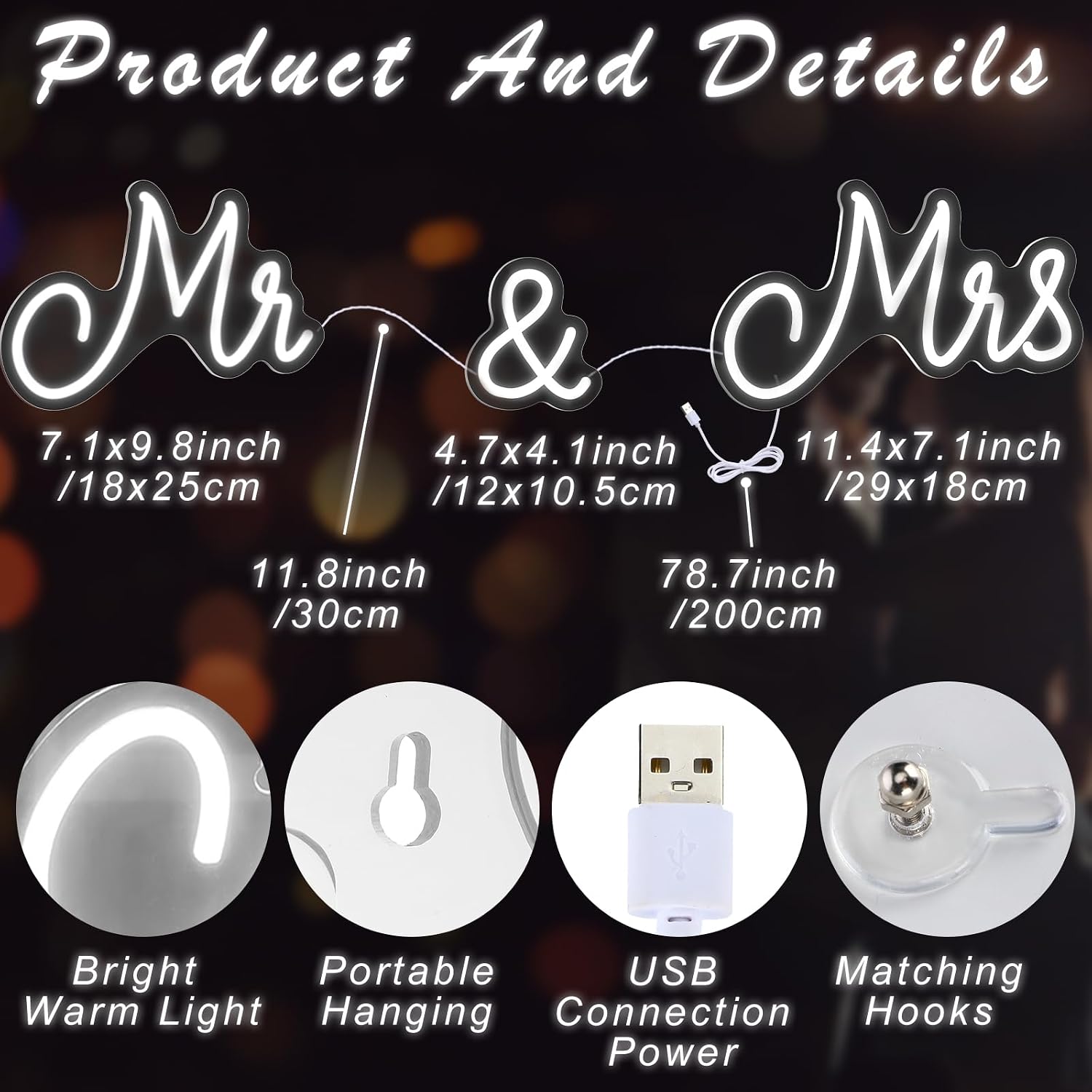
Mr
$29.99
In stock on Amazon
Check price on AmazonH3: Neutral Modern Venue — Mid-Tier Installs
Hotel ballrooms with LED architectural lighting, modern loft event spaces, and restaurant private dining rooms with contemporary fixtures often run in the 3500–4500K range. Here there’s more flexibility: a 3000K sign reads warm and intentional, like a design accent. A 4000K sign blends more neutrally into the environment. Neither produces the blue-cast problem that plagues cool-white signs in warm rooms.
At this tier, it’s worth asking the venue coordinator for their fixture Kelvin spec — many have this on file for AV setup documentation — and cross-referencing before you confirm the order. A mid-tier sign at this level ($400–$900 for a standard phrase in LED flex) should still carry a written Kelvin confirmation from the fabricator.
Apartment Therapy’s consumer lighting editorial coverage on warm versus cool bulbs is useful framing here: the 3000K–3500K range is consistently identified as the “most flattering for skin tones under camera conditions” — a finding that translates directly to how a neon sign in this range will interact with portrait photography at the reception.
Spec recommendation: 3000K–4000K depending on desired effect and venue documentation.
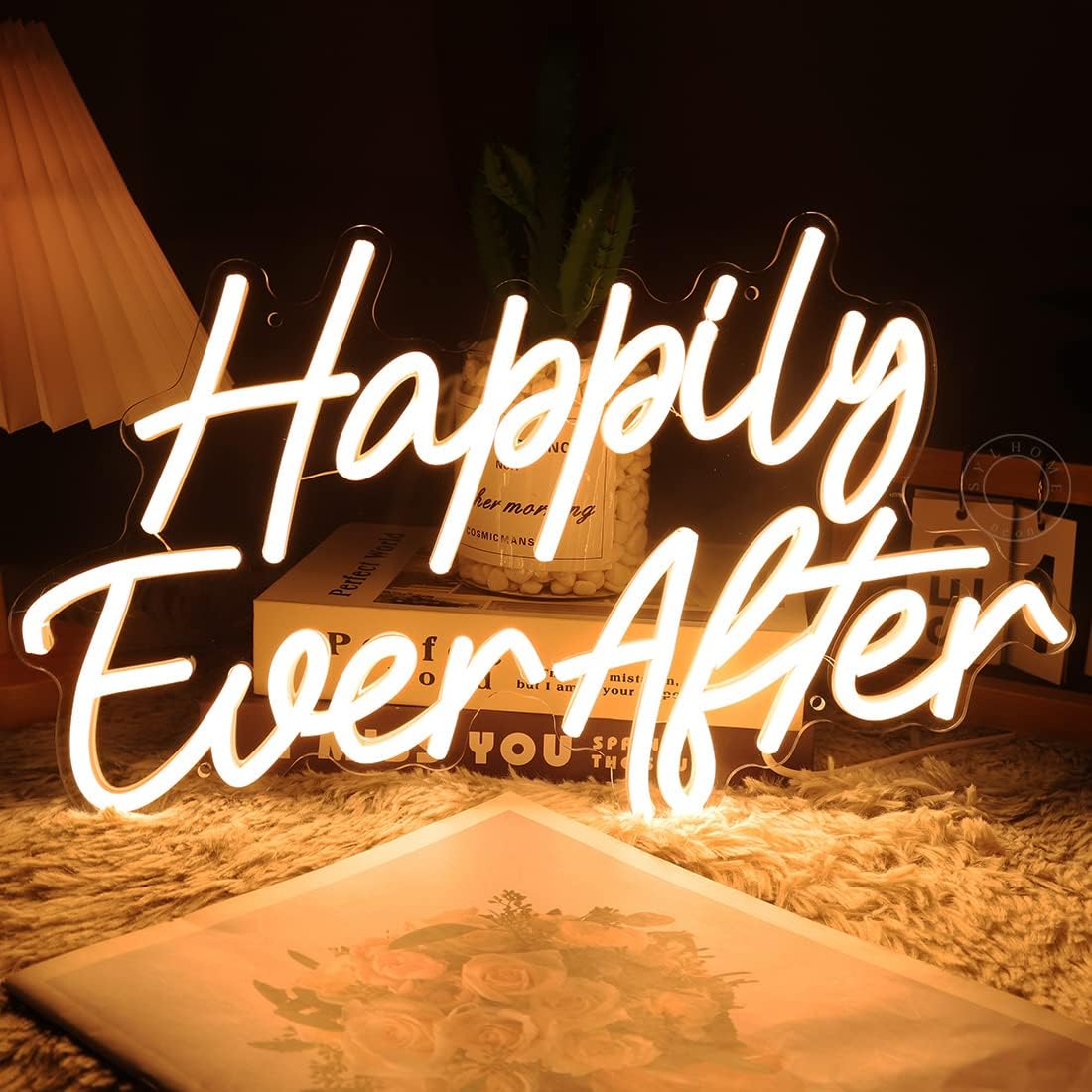
SYLHOME
$36.99
In stock on Amazon
Check price on AmazonH3: Cool or Mixed-Light Venue — Premium Installs
Some modern venues — converted industrial spaces, gallery-white studios, or venues with skylights used for daytime receptions — have higher ambient color temperatures or mixed natural-and-artificial light. In these spaces, a 4000K–4500K sign reads cleanest. Going warmer (2700K) in a cool room can make the sign look yellowed rather than romantic — the opposite of the intended effect.
Premium installs in cool-light venues are also the context where glass neon most often earns its price premium. As noted above, white-coated glass neon with argon fill reads at approximately 3200–3500K — placing it in a range that can bridge between warm-ambient and cool-ambient environments without the jarring mismatch risks of a poorly specified LED flex unit. For statement installations ($1,200–$2,500 and up), glass neon’s inherent color consistency and the ability to verify its spectral output through fabricator documentation justifies the cost differential.
This is also the tier at which dimmer compatibility becomes non-negotiable. A premium sign in a variable-light environment needs to be tunable on-site. Request PWM or 0–10V dimming compatibility explicitly, and verify that the transformer — not just the LED strip — supports it. Glass neon transformers require a neon-rated dimmer, not a standard LED dimmer module; using the wrong type causes flickering and can damage the transformer.
Brides’ and Architectural Digest’s editorial coverage of premium wedding neon installations both identify the cool-light venue as the environment where sourcing precision matters most — because the visual contrast between a mismatched sign and its surroundings is starker and harder for photographers to correct in post.
Spec recommendation: 4000K–4500K for LED flex; white-coated glass neon (argon fill, ~3200–3500K) for premium statement pieces.

Divatla
$99.99
In stock on Amazon
Check price on AmazonThe Decision Rule: One Spec Matrix You Can Put in Your Event Brief Template
Here’s where it lands for practitioners with a current event under contract. This matrix is designed to be copy-pasted directly into your briefing documents.
Warm venue (Edison bulbs, candlelight, string lights as primary ambient): Order 2700K warm white, confirm Kelvin in writing, request dimmer-compatible transformer. This is the right spec for approximately 70–75% of high-end wedding installations in the United States market.
Neutral modern venue (hotel ballroom, contemporary loft): Order 3000K–3500K. Ask the venue for their fixture spec first. This range is the safest bet when venue documentation is incomplete.
Cool or daylit venue: Order 4000K–4500K. Avoid going warmer unless you’ve discussed the warm-accent design choice explicitly with the photographer and they’ve signed off on the white-balance implications.
If you’re building a rental inventory and can only stock one color temperature: 3000K is the single most versatile spec across venue types. It reads warm enough for candlelit rooms at lower dimmer settings and neutral enough for modern spaces at full brightness, and it generates the fewest post-event complaints from photographers across mixed installation contexts.
On vendor qualification: Before confirming any fabricator, request the Kelvin value and CRI rating for their white options in writing. A fabricator who can answer “our warm white is 2700K at a CRI of 90+” is operating with quality controls appropriate for premium event and hospitality work. One who can only say “it’s a warm white, it looks great” is leaving your client’s gallery shots to chance — and at the $800–$2,000 price tier for a statement sign, that’s a sourcing risk that isn’t worth taking.
The photographer will thank you. The client will frame the photos. And you’ll have a repeatable spec decision you can document in your event brief template for every project that follows.