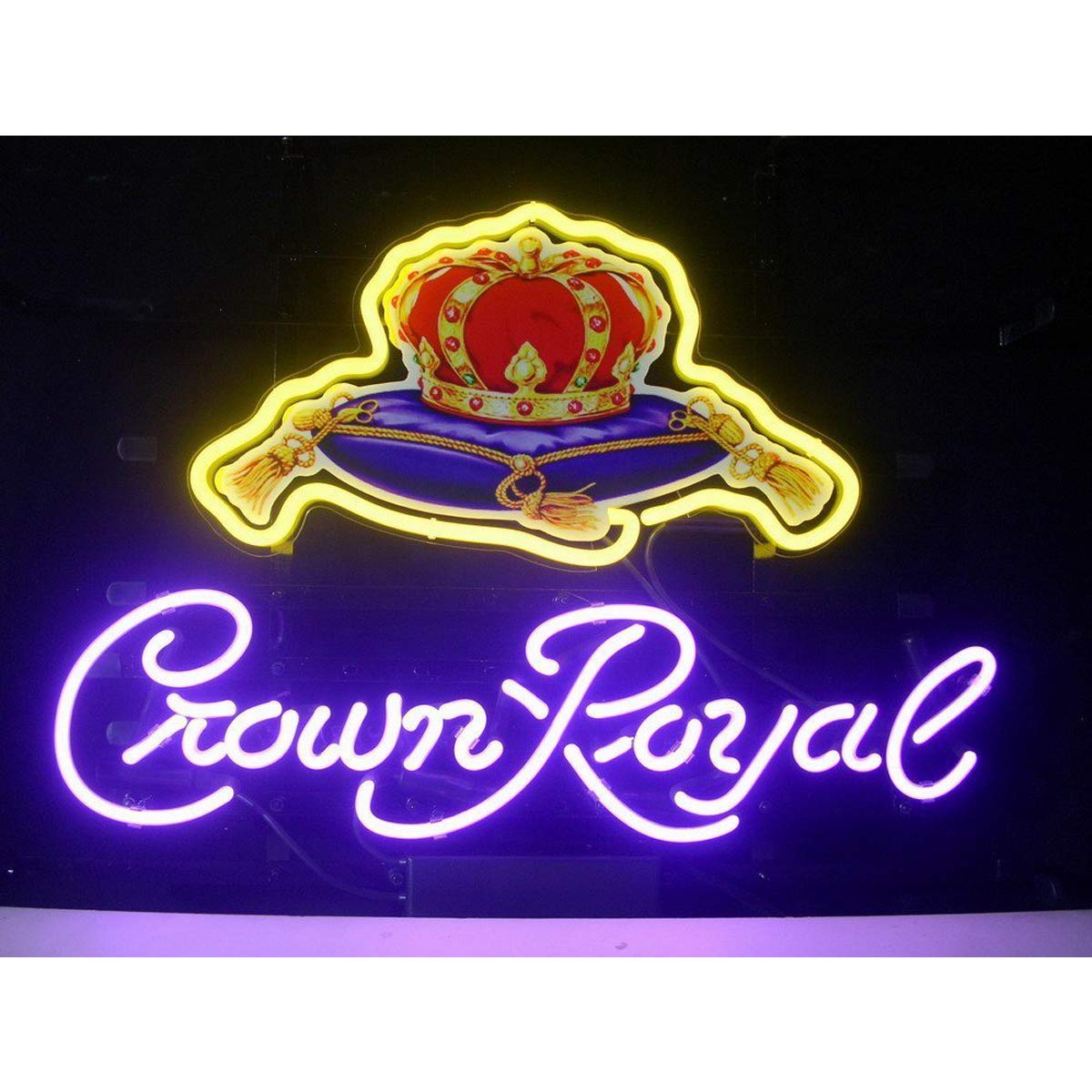
There’s a moment in bar design when the lights go down and the sign comes on — and either it does something or it doesn’t. Real glass neon (meaning signs built from hand-bent glass tubes filled with noble gas, energized by a high-voltage transformer) does something. LED flex neon (the more common format today, using bendable silicone strips studded with tiny LED diodes to simulate neon’s glow) is excellent, affordable, and ships safely in a flat box. But it doesn’t do that. The warm, slightly irregular luminescence of genuine glass neon — the one that makes reviewers write phrases like “I regret giving it away” — comes from physics that a silicone sleeve simply cannot fake at close range. This guide is for buyers who already understand that distinction and are now weighing a real decision: is the glass premium justified for your specific installation, and what are the actual risks you’re absorbing when you choose it?
| EDITOR'S PICK[Handmade Real Glass Neon Tube B…](https://www.amazon.com/dp/B0DXL2LLSQ?tag=greenflower20-20) | Mid-tier[Neon Signs Beer Bar Club Bedroo…](https://www.amazon.com/dp/B07YCZBFYJ?tag=greenflower20-20) | Budget pick[Always Happy Hour Beer Bar Neon…](https://www.amazon.com/dp/B0F919GWPS?tag=greenflower20-20) | |
|---|---|---|---|
| Light source | Real glass neon | Glass neon | LED |
| Power | — | — | USB |
| Dimmable | — | — | ✓ |
| Colors | — | — | 6 colors |
| Size | 24" | — | — |
| Price | $179.99 | $89.99 | $38.99 |
| See on Amazon → | See on Amazon → | See on Amazon → |
What “Real Glass Neon” Actually Means — and Why the Line Is Blurrier Than You Think
The term “neon sign” is used loosely across the market, and even honest sellers blur the taxonomy. Here’s the working framework:
True glass neon uses hand-bent borosilicate or soft glass tubes, filled with neon gas (for the classic red-orange spectrum) or argon with mercury vapor (for blues, greens, and purples), powered by a neon transformer (also called a GTO transformer or electrode power supply) that steps household current up to 2,000–15,000 volts to excite the gas into luminescence.
LED flex neon uses a PVC or silicone jacket over a continuous LED strip, shaped into letters or graphics and mounted on an acrylic backing. Most signs marketed as “neon” on mass-market platforms today are this format.
The crucial middle category — and the most important one for bar sign buyers to understand — is what one Modelo sign reviewer described candidly as “not true neon, but still outstanding value.” These are signs where the chassis, tube shape, and sometimes even the gas-fill effect are partially simulated, or where older glass-neon signs have been refurbished with modern electrode ends but original tube bodies. The reviewer’s candor is worth anchoring to: a sign that is honest about being hybrid or LED-based but delivers genuine visual impact is a legitimate product. The problem is when the listing doesn’t disclose it.
Signs of the Times magazine, in their 2025 coverage of the handmade glass neon revival, notes that the gap between “glass neon aesthetics” and “genuine glass neon fabrication” has widened as demand for the look has outpaced the supply of skilled tube benders — a trade skill that takes years to develop and has a shrinking practitioner base.
The Premium, Quantified: What You’re Actually Paying For
By the numbers:
| Format | Typical price range (custom, ~24” sign) | Transformer lifespan | Fragility risk in shipping |
|---|---|---|---|
| LED flex neon | $150–$500 | 30,000–50,000 hrs (LED rated) | Low — flexible, foam-packed |
| Genuine glass neon | $400–$1,200+ | 10–15 years (transformer); tubes indefinite if intact | High — glass breakage, electrode stress |
| Licensed brand bar sign (glass) | $200–$600 (pre-made) | Varies by manufacturer | Moderate — rigid crating recommended |
The price delta is real, and it’s not all margin. Architectural Digest’s 2025 bar design trend coverage notes that hand-bent glass neon fabrication is inherently labor-intensive: a skilled tube bender working a single custom script sign can invest 4–8 hours in bending, sealing, and gas-filling before the sign ever reaches a transformer. That labor cost is the premium. When you pay more for glass, you’re mostly paying for human time and a perishable skill.
What you get in return, per aggregated buyer reviews across glass neon bar sign categories: a quality of light that multiple owners describe with vocabulary they don’t apply to other sign purchases. “Stunning” and “amazing color” appear in glass neon reviews at a frequency that LED sign reviews — even very good LED sign reviews — don’t match. The glow has depth. It has warmth variation across the tube length. It has the slight irregularity that signals hand-craft. For a home bar back wall or a hospitality installation where the sign is the atmosphere, that difference is not trivial.
The Risk Side: Quality Control, Arrival Defects, and Paint Flaking
Here’s the part most buying guides skip, and it matters especially if you’re speccing glass neon for a commercial build or event installation with a hard deadline.
Arrival defects are a documented risk category. The most explicit quality-control failure story in glass neon review data involves a Tito’s branded sign that arrived only partially lit — a not-uncommon failure mode in glass neon where electrode connections, jostled in transit, fail to make full contact or where a tube crack has broken the gas seal in one section. The reviewer’s experience is instructive: the replacement was handled well, and they upgraded their rating to five stars. Vendor responsiveness matters enormously in this category. Before ordering any glass neon sign, confirm in writing: What is the defect-on-arrival policy? What documentation (photo, video) is required to trigger a replacement? What is the replacement lead time?
For commercial builds on a timeline, build in a two-to-three-week arrival buffer for glass neon specifically. LED flex signs can be replaced quickly from inventory. A custom glass neon piece that arrives with a dead section needs to go back to a tube bender.
Paint flaking at tube-wire contact points is a genuine glass neon artifact, documented specifically in reviewer notes and not a defect so much as a known material behavior. Where the electrode wire bonds to the glass tube, thermal cycling (the tube heating and cooling during use) can cause the black electrode paint or lacquer to micro-crack and eventually flake. This is cosmetic in most cases — it doesn’t affect luminescence — but it can look shabby on a close-inspection installation like a home bar where the sign is at eye level. If this matters to your installation, ask your fabricator about electrode sleeve covers or ask to see finished examples of their electrode treatment.
Per Sign Media Canada’s fabricator-perspective coverage, quality glass neon shops address this by using heat-shrink sleeve covers over electrode bonds rather than relying on paint alone — a detail worth asking about explicitly when comparing fabricators.
When Glass Neon Is Worth It, and When It Isn’t
This is the decision frame you actually need.
Choose real glass neon if:
- The sign is a permanent installation in a home bar, restaurant, or hospitality space where it will be viewed from 6–15 feet away, and the ambient lighting is dim or directional. At medium-to-far distance in bar lighting conditions, glass neon’s depth of glow reads as categorically different from LED flex.
- You’re buying a licensed brand sign (Modelo, Tito’s, a craft distillery’s mark) for collectibility or brand authenticity reasons. Multiple buyers report purchasing glass brand signs as gifts and expressing personal regret at having given them away — a signal about perceived collectibility that LED versions of the same marks don’t generate at the same intensity.
- Your client or venue has spec’d genuine neon as a design standard, and the Architectural Digest or House Beautiful coverage your client is referencing is showing glass tube installations. Don’t substitute LED flex and hope they won’t notice — experienced designers notice within minutes.
- You have adequate lead time (4–8 weeks minimum for custom; 2–3 weeks plus buffer for in-stock licensed signs) and a vendor with a documented replacement policy.
Choose LED flex neon if:
- The installation is outdoor or semi-outdoor (a covered patio, a venue tent, a rooftop bar). Glass neon and weather are a poor pairing. Quality LED flex signs with IP65 ratings handle moisture; glass tubes and outdoor humidity are a fragility and safety concern.
- You need multiple identical units — for an event rental inventory, a chain buildout, or prop duplication. LED flex signs can be ordered in consistent batches. Glass neon is hand-bent, which means minor variation between units.
- Dimmer compatibility is a hard requirement. LED flex signs integrate cleanly with standard trailing-edge dimmers and smart-home systems. Glass neon transformer dimming is possible but requires compatible electronic dimmers rated for transformer loads — not every smart dimmer will work, and some will cause flicker or buzz.
- Your budget is under $400 for a custom sign. Below that threshold, you’re not getting genuine glass neon from a reputable fabricator; you’re getting LED flex, a hybrid, or an import of uncertain quality control.
Frequently Asked Questions
How can I tell if a sign listed as “glass neon” is actually glass or LED flex tube? Ask the seller for a close-up video of the sign powered on, filmed from 12–18 inches away. Genuine glass neon shows visible tube diameter variation, slightly uneven luminescence along the tube length, and electrode end caps with wire leads. LED flex neon shows a perfectly uniform glow with visible LED “dotting” at very close range, and the tube body looks identical in diameter throughout. If the seller can’t provide this video, treat the listing skeptically.
What happens if my glass neon sign arrives with a tube that does not light up? Document it immediately with a video showing the sign powered on, the dark section clearly visible. Contact the vendor the same day — most reputable sellers have a 48–72 hour defect-on-arrival window. Per the pattern in aggregated buyer reviews, vendors who handle this well typically offer a replacement at no cost; the replacement process for glass neon usually runs 2–4 weeks. If a vendor hedges on replacement for a clear manufacturing defect, escalate via your payment platform’s dispute process.
Are real glass neon signs safe for home bar wall mounting? Yes, with appropriate mounting. Glass neon signs should be mounted on a rigid backing (typically the acrylic or steel backer they ship with) using the manufacturer’s provided hardware, secured into wall studs or with appropriate anchors for the sign’s weight. Keep them away from high-traffic areas where they could be knocked. The transformer runs warm during operation — ensure it has 6 inches of clearance and is not enclosed. Apartment Therapy’s neon sign buying guidance recommends never mounting any neon sign — glass or LED — near flammable materials or in enclosed spaces without ventilation.
How bright are real glass neon signs compared to LED neon signs of the same size? Glass neon produces light in a 360-degree omnidirectional pattern — the tube glows all the way around, creating ambient illumination behind the sign as well as in front. LED flex neon is typically directional, projecting light primarily forward. In a dim bar environment, glass neon reads as “brighter” and more atmospheric even at equivalent wattage because of this omni-directional quality. For raw lumen output, LED flex can actually exceed glass neon; but luminous quality and ambiance are not the same as lumen count.
Do glass neon bar signs come with dimmer controls? Most pre-made licensed glass neon bar signs ship without dimmers. Custom fabricators can include dimmer-compatible transformers, but this should be specified at order time. If dimming is important to your installation, confirm the transformer type (electronic vs. magnetic) and ask specifically which dimmer models the fabricator recommends. Not all standard wall dimmers are compatible with neon transformers — using an incompatible dimmer can cause buzzing, flickering, or transformer damage.
What size glass neon sign do I need for a home bar back wall? House Beautiful’s home bar styling guidance suggests treating the back wall sign as you would a piece of artwork: it should occupy 50–75% of the wall width it’s anchored to, at a height that reads clearly from your primary seating position. For a standard 6-foot bar back, a sign in the 36–48 inch range is the working sweet spot. For larger back bars (8–10 feet), 48–72 inches reads proportionally. Single-word signs read well at smaller sizes; multi-word phrases or script text need more horizontal run to remain legible — allow at least 10–12 inches of sign length per word in script lettering.
The decision, in plain terms: if the sign is the room’s focal point, the installation is permanent, and you have the lead time to do it right, real glass neon earns its premium. If you’re building inventory, working outdoors, or need a dimmer-integrated smart-home setup, LED flex is the more practical choice — and the best LED flex signs are genuinely outstanding. What you should never do is pay glass neon prices for an undisclosed LED flex product. Ask the question. Get the video. The honest sellers will not hesitate.