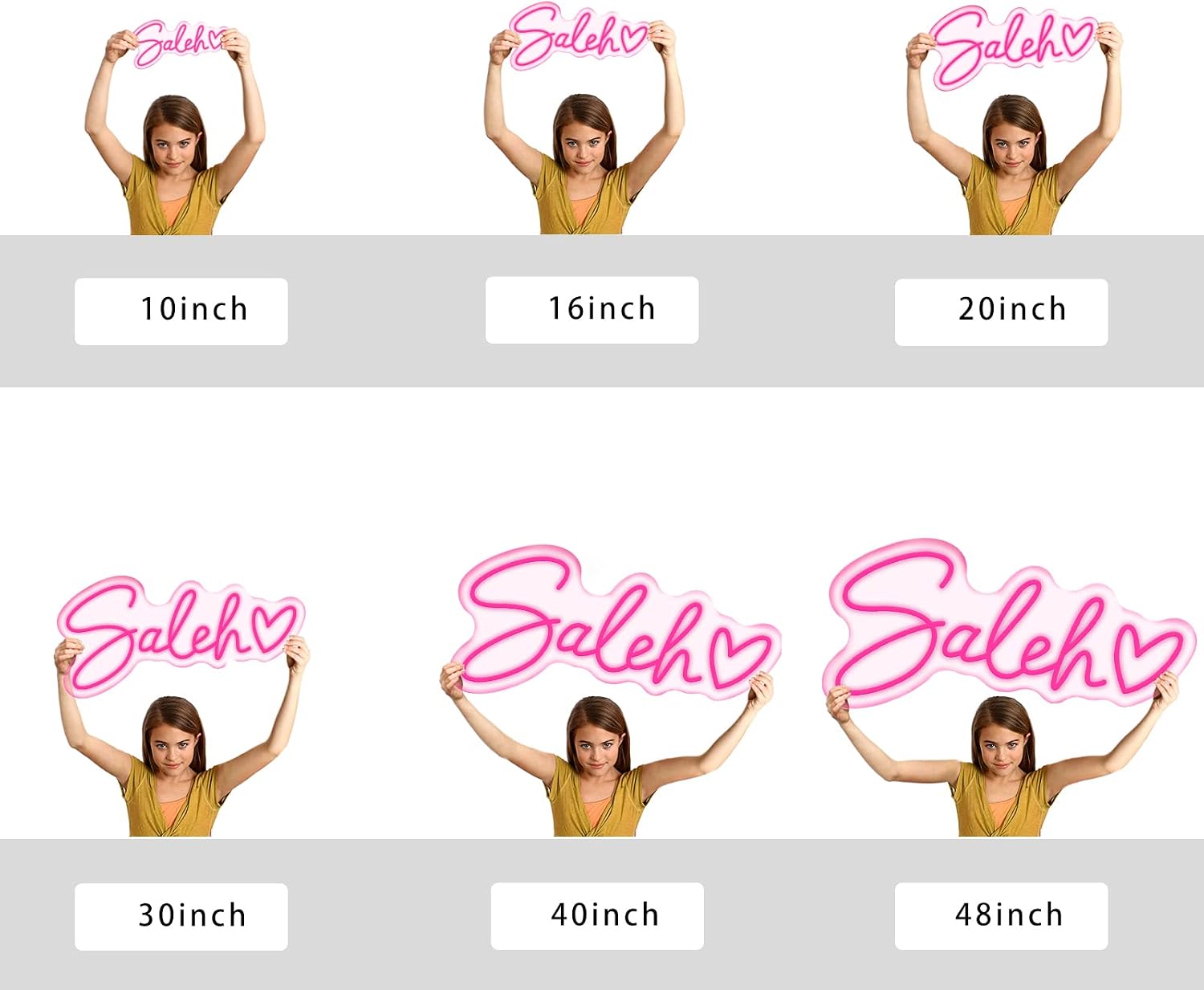
If you’ve been shopping for a neon sign — the kind that glows in a warm, continuous line of light and reads a name, phrase, or logo — you’ve already noticed the fork in the road: buy one that’s already made and ships tomorrow, or order one built to your exact specs and wait a few weeks. Both categories use the same core technology (LED flex tubing bent into shape over an acrylic backing, rather than traditional hand-blown glass filled with electrified gas), but the buyer experience, the risk profile, and the value math are genuinely different. This article is for the person who has a real decision in front of them — a bar buildout, a wedding installation, a branded retail wall — and needs to know which path actually makes sense before they commit.
What You’re Actually Comparing
Pre-made signs are exactly that: a fixed design, a fixed size, manufactured in volume and warehoused for fast fulfillment. Popular options in the under-$100 range have carved out a solid market because they deliver on brightness and aesthetic for buyers who need something decorative and fast. The trade-off is dimensional: you get what’s on the listing, and the listing photo is almost always shot at an angle that flatters the scale. Across aggregated purchaser reviews on major retail platforms, the single most repeated complaint isn’t color accuracy or build quality — it’s size. Buyers describe expecting something closer to 24 inches and unwrapping something closer to 14. That’s not a defect; it’s a communication gap. But it’s a gap that costs real money when you’ve already framed a wall or built a prop budget around a specific footprint.
Custom signs — from fabricators like LC Sign, CIONAOR, CBWMVQTR, Wakklia, and OPBYWE — operate on a different contract with the buyer. You submit text, a logo, or increasingly an AI-generated image. A human (or design tool) renders it into a layout proof. You approve it. Then it’s built. The proof stage is the critical moment, and reviewers of these brands cite it repeatedly as the reason they felt confident completing the purchase. One CBWMVQTR reviewer put it plainly: the proof showed exactly what they were getting before a single watt of power was committed to bending tube. That’s not a small thing when you’re deciding between a $400 custom piece and a $90 pre-made alternative.
The Size Problem Is the Budget Problem
Here’s the math that most buying guides skip.
- Average pre-made sign footprint for a short decorative phrase: 12–16 inches wide
- Minimum useful width for a bar back-wall anchor sign: 24–36 inches
- Average price jump from pre-made to custom at 30-inch width: $180–$340
- Average cost of a traditional blown-glass neon equivalent at that size: $800–$1,800+
That last line is one reviewers highlight repeatedly — framing custom LED neon as delivering the same visual punch as glass neon at a fraction of the cost. Sign Media Magazine, in its LED Flex Neon Market Overview 2025, describes this structural shift as LED flex effectively democratizing the look of glass neon for commercial and residential buyers who can’t justify glass neon’s fabrication costs or fragility risk.
So the budget call isn’t really “pre-made at $90 vs. custom at $350.” It’s “pre-made at $90, discover it’s the wrong size, reorder a custom sign at $350” — total spend $440, plus the time loss. If your installation has a hard event date or a contractor’s schedule attached, that reorder window may not exist.
The decision rule for size-sensitive projects: if your wall, backdrop, or display has a defined minimum dimension, go custom first. The proof process exists specifically to eliminate the size surprise.
Three Buyer Scenarios: Which Tier Is Right for You
The clearest way to map this decision is by buyer type. Each scenario below represents a real purchasing context with different priorities, risk tolerances, and definitions of “value.”
The Home and Gift Buyer
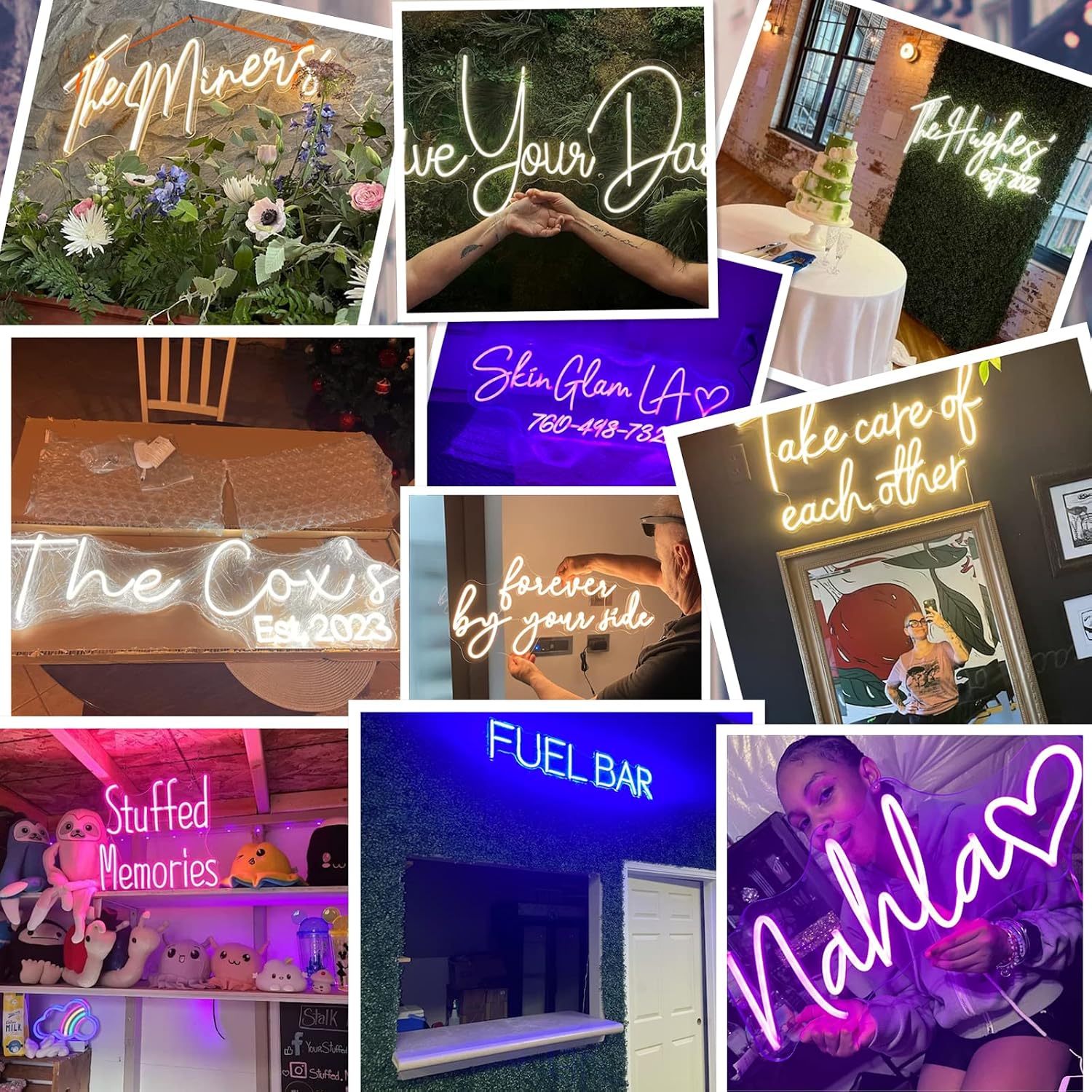
For nurseries, home offices, and accent walls where the sign is decorative rather than dimensional, pre-made is fast, returnable, and often excellent on brightness. House Beautiful, in its roundup “The Best Neon Signs for Every Room,” consistently recommends pre-made options for residential settings where the sign can be anywhere from 12 to 20 inches without changing the room’s design logic.
Brands like IbayNawi and Lucunstar receive consistent positive reviews on color vibrancy and plug-and-play installation. The risk is low because the consequence of a size mismatch is aesthetic, not contractual. At $80–$150 for a birthday or nursery reveal gift, the decision doesn’t require proof stages or fabrication timelines.
Yatvro
$24.99
In stock on Amazon
Check price on AmazonThe Event and Wedding Buyer
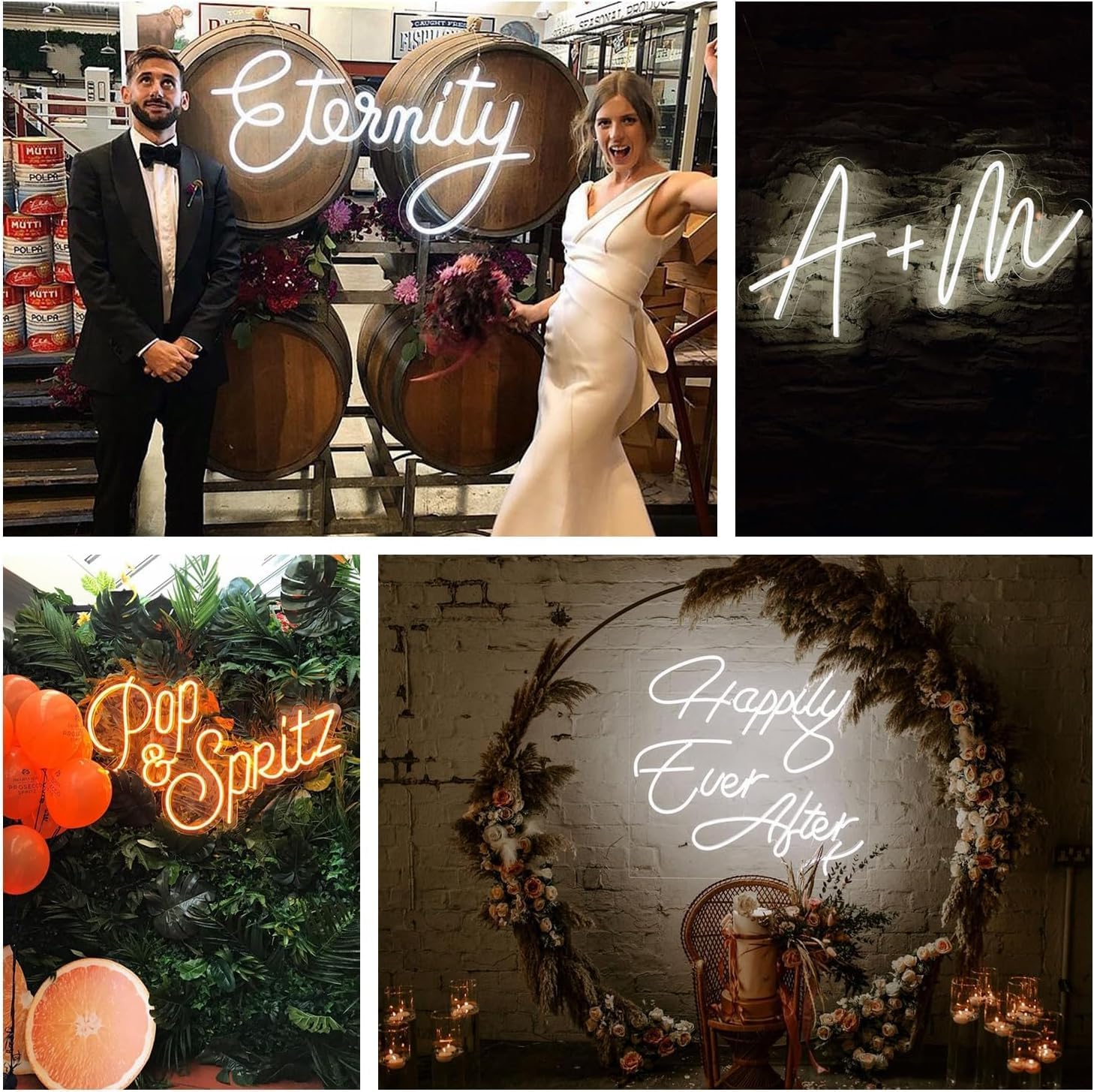
The Knot’s Wedding Signage Trends Report 2025 notes that couples increasingly request digital mock-ups of their ceremony and reception signage in context — placed on a wall photo or a backdrop render — before approving production. Fabricators who offer this level of proof responsiveness are winning repeat business from wedding planners and event designers.
For a phrase specific to one couple (“SMITH & JONES EST. 2026”), custom is the only viable path. Purchasing a custom wedding sign runs $200–$600 for most text-based designs; rental from an event prop company typically runs $150–$350 for the weekend. If you want to keep the sign or resell it, buying makes sense. The Knot’s wedding signage coverage consistently shows custom neon as one of the higher-ROI décor line items when the sign can be repurposed or resold — buyers who sell after the event typically recover 40–70% of the purchase price.
For event prop rental operators building inventory, pre-made signs in standard sizes (“LOVE,” “OPEN BAR,” “MR & MRS”) let you test which phrases generate rental demand before investing in custom builds. Signs.org’s Custom Signage Buyer Guidance notes that rental operators often run pre-made inventory in the first 12 months before converting high-demand phrases to custom pieces with their own branding or higher-spec weatherproofing.
LC
$44.88
In stock on Amazon
Check price on AmazonThe Commercial and Brand Buyer
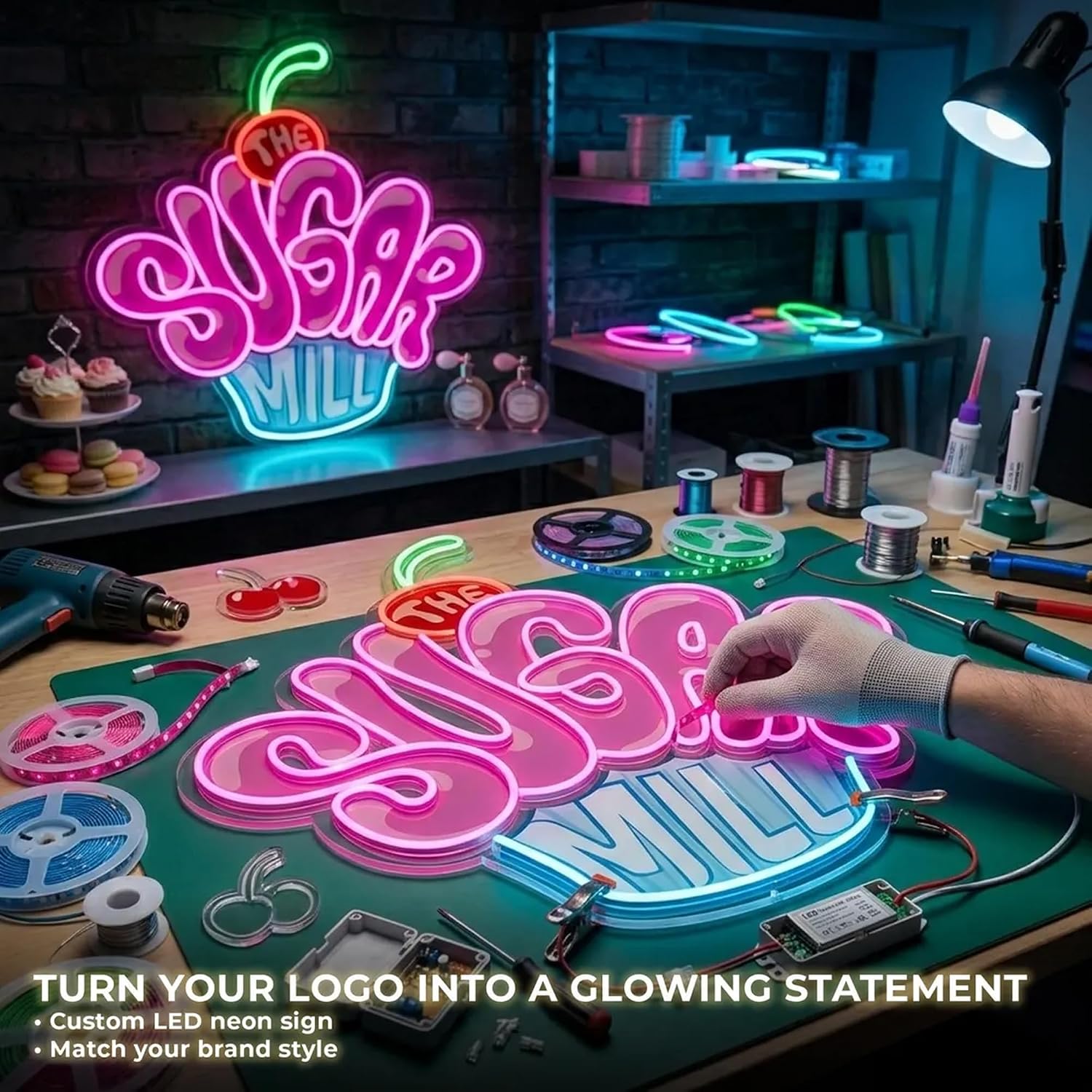
For bar buildouts, lobby installations, retail walls, and branded environments, the calculus shifts entirely toward custom. One DC173SVL reviewer specifically flagged multi-font, multi-line capability as a product gap they hadn’t been able to fill anywhere else — a meaningful signal for commercial buyers whose briefs require a headline in one typeface and a tagline in another, layered on a single sign.
Architectural Digest, in its feature “How Neon Signs Became a Design Staple,” notes that the shift toward custom LED neon in high-design residential and hospitality contexts has been driven by a combination of fabrication timelines that fit project schedules and price points that fit budgets that would never have supported glass neon.
Post-sale service patterns also matter here. Custom fabricators show a higher rate of proactive problem resolution: replacements issued months after delivery, same-day responses during holiday order windows, and direct communication with the production team rather than a scripted support queue. A sign that fails six months into a restaurant buildout isn’t just an aesthetic problem; it’s a brand problem. Knowing a fabricator will respond and replace is worth real money in project contingency planning.
Custom
$54.89
In stock on Amazon
Check price on AmazonThe Proof Stage: Why It’s Non-Negotiable for Custom Orders
The proof stage deserves its own section because it’s where custom sign buyers report the most trust — and where the category earns its premium.
Across reviews of LC Sign, CIONAOR, and Wakklia, the pattern is consistent: buyers who received a digital proof before production describe far higher confidence in the final product than buyers who ordered from fabricators who skipped or rushed this step. CBWMVQTR reviewers cite the proof explicitly as the trust pivot — the moment they went from uncertain to committed.
If a fabricator’s ordering process doesn’t mention a proof or design approval step, ask before you pay. This is non-negotiable for commercial buyers and strongly recommended for event buyers with a fixed installation date.
Production timeline benchmarks based on published fabricator specifications:
- Pre-made, standard shipping: 2–5 business days
- Custom LED flex, simple text, single color: 7–12 business days
- Custom LED flex, logo or multi-element design: 12–21 business days
- Rush custom (where offered): add 30–50% to base price, subtract 5–7 business days
For event installations with a fixed date, order at minimum 30 calendar days out and confirm the fabricator’s current production queue at the time of order.
Logo Signs and UV Printing: A Separate Category
One distinction worth naming explicitly: UV-printed logo signs and standard custom text signs are not the same product, even if they appear in the same product categories.
A standard custom text sign uses LED flex tubing bent into letter forms. The light source is the tube itself. You get that continuous, glowing-line aesthetic that reads as neon from across a room.
A UV-printed sign uses a flat acrylic panel with your logo or image printed directly onto the surface, backlit or edge-lit by LEDs. The effect is more like a lightbox than a neon sign. Both are legitimate products, but they serve different visual briefs. A brand mark with fine detail, gradients, or photographic elements is often better served by UV printing. A brand name, tagline, or decorative phrase in a script or serif font reads better as true LED flex.
If you’re uploading a logo for a bar or retail installation, ask the fabricator which production method they’re quoting. The price and the visual output are both different, and knowing which you’re buying prevents an expensive misunderstanding.
Frequently Asked Questions
How do I make sure my custom sign comes out the right size? Specify dimensions explicitly in your order — don’t rely on the fabricator to interpret “medium” or “large.” Request that the proof include a scale reference (a standard door, a human silhouette, or a tape measure graphic). Reviewers who measured their space first and communicated those measurements in the order notes consistently report correct sizing.
Do custom neon sign sellers send a proof before production? Most reputable custom fabricators do, and you should treat it as non-negotiable. LC Sign, CBWMVQTR, and Wakklia all appear in reviews where the proof is cited as the trust pivot. If a fabricator’s ordering process doesn’t mention a proof or design approval step, ask before you pay.
How long does a custom LED neon sign actually take to arrive? Plan for 10–21 business days from order to delivery for standard custom builds, plus shipping transit time. For event installations with a fixed date, order at minimum 30 calendar days out and confirm the fabricator’s current production queue.
Can I upload my own logo or AI-generated image for a custom neon sign? Yes, most custom fabricators accept vector files (SVG, AI, EPS) or high-resolution raster images. AI-generated artwork works well as a starting point, but the fabricator’s design team will need to simplify it into a form that can be physically reproduced in flex tubing. Complex gradients and photorealistic detail won’t translate to LED flex — but they will translate to UV-printed panel signs.
What is the difference between UV-printed logo signs and standard custom text signs? UV-printed signs are backlit or edge-lit acrylic panels with your image printed on the surface — think lightbox. Standard custom neon signs use bent LED flex tubing to form letters or shapes — think glowing line. For brand logos with fine detail, UV printing is often the better spec. For text and script designs, LED flex is the closer match to the neon aesthetic.
Is a custom neon sign worth it for a one-time event like a wedding? The math depends on whether you’re buying or renting. If your phrase is specific to you and you want to keep it, buy. If you want a phrase with resale or rental value, purchasing to sell or rent afterward can recover 40–70% of the purchase price. The Knot’s Wedding Signage Trends Report 2025 consistently identifies custom neon as one of the higher-ROI décor line items when the sign can be repurposed or resold.
The Decision Frame
If you’re sitting with a purchase decision right now, here’s the honest if/then:
If your project has defined wall dimensions, a brand mark, or a phrase that doesn’t exist in pre-made inventory → go custom, budget for the proof stage, and order 30 days ahead of your deadline.
If your project is flexible on size and phrase, ships to a home or low-stakes venue, and needs to arrive this week → pre-made is the right call; just measure your space and cross-reference the listing dimensions before checkout.
If you’re a commercial buyer building a bar wall, lobby installation, or rental prop library → start with custom for your hero pieces, use pre-made to test phrase demand, and build the service relationship with a fabricator who sends proofs and responds fast. That relationship is worth more than the per-sign price difference when something goes wrong at 11pm the night before an opening.
The budget call only matters when you’re comparing the right things. Size-for-size, spec-for-spec, with post-sale service factored in, the gap between pre-made and custom is narrower than the sticker prices suggest — and the gap in outcomes is wider.