If you’ve ever searched for a neon sign shaped like a character — a game controller, a Mario mushroom, King Boo from Luigi’s Mansion, or an anime sword — you’ve likely noticed that the category looks deceptively uniform in product photography. Nearly everything glows. Nearly everything costs somewhere between $30 and $150 at the entry level. And nearly everything is described as “LED neon,” a term worth unpacking immediately: it means flexible silicone or PVC tubing with LED strip lighting inside, engineered to mimic the warm glow of traditional glass neon without the fragility or voltage requirements of real glass. That distinction matters enormously for a child’s bedroom or a teen’s gaming setup, because genuine glass neon carries mains voltage and can shatter — LED neon flex does neither. What this article gives you is a framework for reading quality signals in the gaming and anime character sign subcategory specifically, where durability data from real buyers is unusually informative and the gap between the best and worst products is wider than the price tags suggest. The three tiers below — budget, mid, and premium — reflect the quality markers that separate them.
How to Read Durability Signals in Character Neon Reviews
In most neon sign categories, reviewers focus on color accuracy and brightness. In the gaming and character category, the dominant concern — often surfacing only in the second paragraph of a five-star review — is whether the sign holds up over months of daily operation. This is a gift-driven category: a parent or partner buys a sign for a child’s room, and the implicit promise is that it will still be glowing a year later. That changes which reviews are most informative.
Buyers who document near-year or multi-year daily use with no degradation in brightness or structural integrity are producing the most meaningful evidence available. That level of specificity is rare in neon sign reviews, where most feedback is written within weeks of unboxing. LED neon flex is rated by manufacturers at approximately 50,000 operating hours, according to Sign Media Canada’s LED Neon Flex Product Standards Overview, 2024 — but real-world daily-use confirmation is worth more than spec-sheet projections to a parent buying for a twelve-year-old’s room.
A useful contrasting pattern appears in the budget segment: signs that earn five-star ratings from buyers who nonetheless flag them as “really fragile.” That tension — full satisfaction alongside a fragility warning — tells you the sign delivered on its visual promise but that the buyer is already mentally categorizing it as delicate. For a wall-mounted display piece that won’t be touched after installation, fragility matters less. For a teen who repositions signs seasonally or a prop-rental company cycling inventory through events, that same fragility becomes a recurring cost.
The decision frame here is straightforward: if the sign will be installed once and left alone, moderate fragility is acceptable; if it will be handled repeatedly, prioritize products with documented long-run durability.
Three Quality Tiers in the Gaming and Anime Character Sign Category
Budget Tier: Character Appeal Over Longevity
Kavaas
$23.59
In stock on Amazon
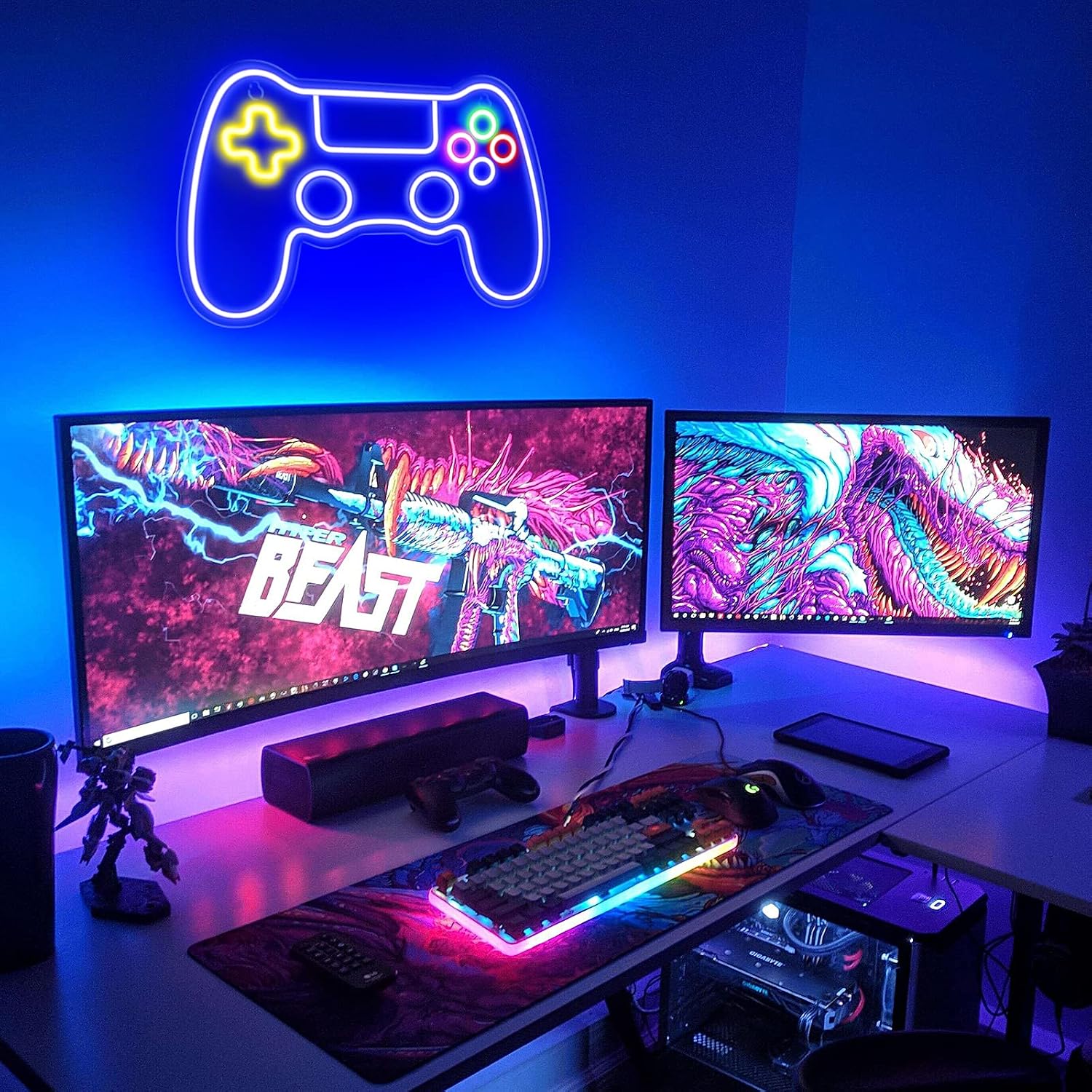
Check price on AmazonBudget character neon signs — typically $30–$70 — prioritize visual accuracy to licensed characters over structural robustness. The wootfairy character sign is representative: it satisfies buyers visually, earns strong ratings on color and glow quality, but carries fragility warnings that experienced buyers notice. The fragility in this tier typically lives at the connection points between LED tubing and the acrylic backing board, which is where character-shaped signs with complex outlines concentrate stress during handling.
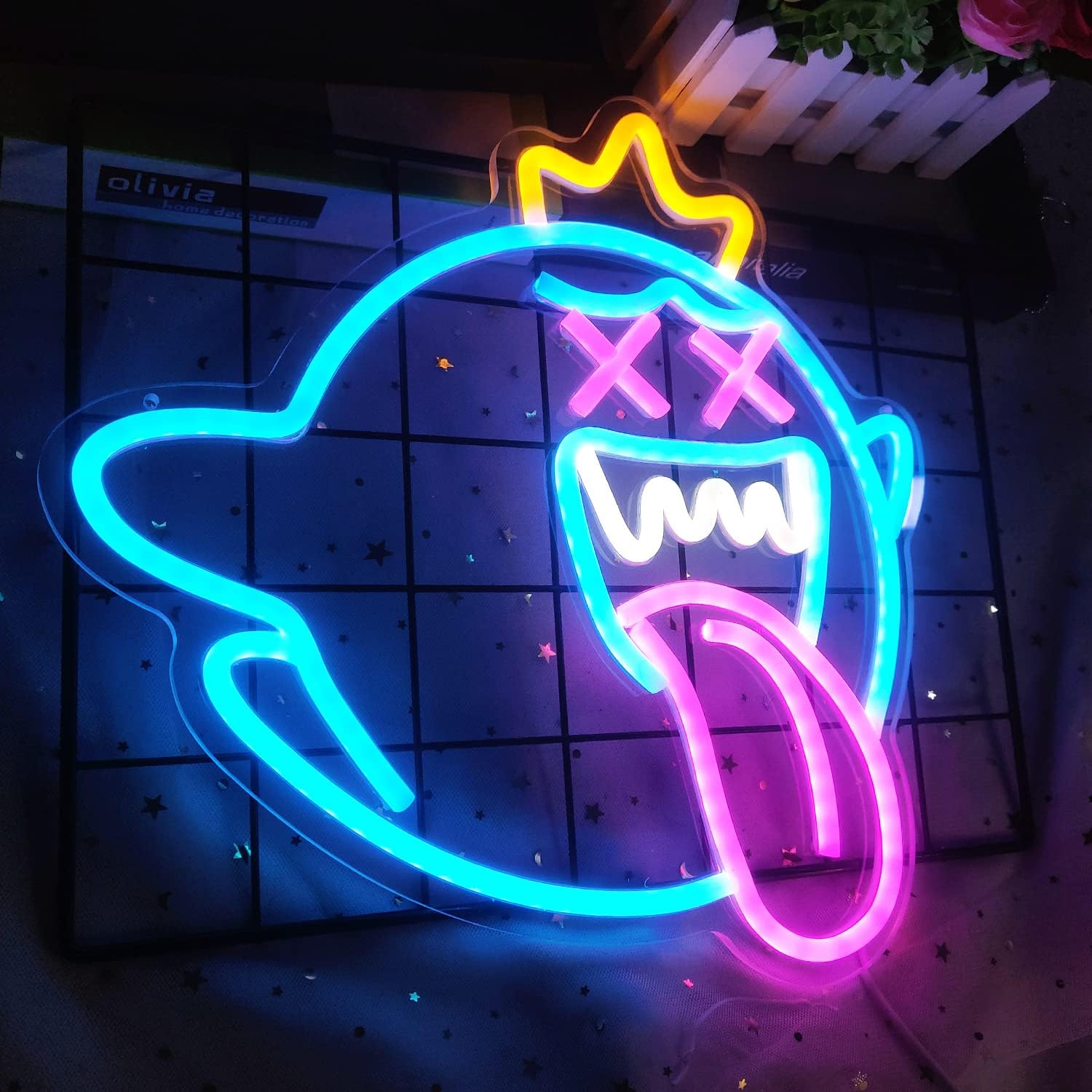
The King Boo character sign follows a similar pattern and surfaces a secondary issue specific to the budget tier: packaging anxiety. One buyer documented concern over a thin box with minimal foam protection — a worry that proved unfounded on arrival, but that reflects a real variance in vendor practices. Signs of the Times Magazine’s Character Licensing and Custom Signage: Category Trends, 2025, notes that character-licensed sign sellers operating on marketplace platforms have widely variable return windows, ranging from 15 days to 90 days, and that response times on damage claims correlate with the platform’s own buyer protection program rather than vendor quality standards.
Budget tier is right for: gifts that will be wall-mounted and left in place; buyers who prioritize character design over structural durability; purchases where the platform’s return window provides adequate protection.
Budget tier is wrong for: signs that will be handled repeatedly; prop-rental inventory; child’s bedrooms where driver certification is a safety priority.
Kavaas
$23.59
In stock on Amazon
Check price on AmazonMid-Tier: Documented Durability and Smarter Features
 product image](/images/external/a7ff92cd4be4.jpg)
Dleouly
$23.99
In stock on Amazon
Check price on AmazonThe mid tier ($70–$130) is where buyer-documented durability data becomes available and meaningful. The Kavaas gamer sign generates one of the most useful data points in this category: a reviewer who specifically documents nearly a year of daily use with no degradation in brightness or structural integrity. At 10 hours of daily use, Sign Media Canada’s 2024 standards overview projects LED neon flex reaching its L70 brightness threshold (70% of original output) after approximately 13–14 years — the Kavaas near-year report is consistent with that projection and confirms the LED driver is performing within spec.
The Welltodo motion sensor gaming sign earns the most technically literate positive review in this tier. The buyer explicitly distinguishes between “LED strip in rubber housing” and glass neon construction — an unusual level of product literacy that surfaces in organic feedback rather than from the listing description. That distinction clarifies the core safety case for LED flex neon in youth spaces: it won’t shatter if bumped, runs cool enough to touch safely, and requires no licensed electrician to service. Apartment Therapy’s How to Style a Gaming Room with Neon, 2025, identifies these properties as the primary reason LED neon has displaced glass neon almost entirely in residential gaming and youth bedroom installations.
The motion sensor feature warrants its own consideration. Most motion-activated neon signs in this price tier use passive infrared (PIR) sensors with a 90–120 degree detection arc and a 3–5 meter range. For a wall facing the room’s entry point — the most common gaming room layout — the sensor triggers reliably and reduces cumulative runtime hours. For a corner installation behind a monitor, the sensor may underperform. Evaluate placement before treating the motion feature as a core requirement rather than a bonus.
By the numbers at this tier:
- LED neon flex manufacturer rating: ~50,000 operating hours (Sign Media Canada, 2024)
- Glass neon typical lifespan: 10,000–15,000 hours before noticeable lumen decay
- Daily bedroom use: ~8–12 hours/day = 4,000–6,000 hours/year
- Projected years to L70 at 10 hrs/day: ~13–14 years
Mid-tier is right for: buyers who want durability evidence before committing; gaming rooms with door-facing wall placements where motion sensors add real value; gift purchases where a one-year daily-use projection matters.
Mid-tier is wrong for: buyers who need UL-certified drivers confirmed in writing; prop-rental inventory requiring multi-year documentation.
Dleouly
$23.99
In stock on Amazon
Check price on AmazonPremium Tier: Multi-Year Data and Safety-First Construction
King
$33.99
In stock on Amazon
Check price on AmazonThe premium tier ($130 and above, or any sign with multi-year buyer-verified performance data) is where the LED driver quality separates from the rest of the category. The Moon Mushroom sign has a multi-year durability report from a verified buyer — an unusually long feedback window that puts it in a different evidential tier from most character neon reviews. Multi-year real-world data at this price point is rare enough to warrant specific attention. It suggests the LED driver — the component most likely to fail first in flex neon signs, not the tubing itself — is sourced above the category floor.
House Beautiful’s Kids Room Lighting Safety Guide, 2024, identifies the LED driver as the component parents should prioritize when evaluating any neon sign for a child’s bedroom. A low-quality driver can produce electrical noise, flicker, or fail with heat rather than simply going dark. Reputable signs in this category run on 12V or 24V DC drivers, which are inherently low-voltage. The presence of a UL, CE, or ETL listing on the driver is the single clearest safety signal available before purchase; its absence is worth factoring into any purchase for a child’s room. House Beautiful’s 2024 guide recommends daytime-only use for any sign with an uncertified power supply.
At this tier, acrylic backing board thickness also differentiates products. Thicker acrylic (5–6mm versus the 3mm common at budget tier) provides meaningfully better wall stability and resists cracking under point pressure during shipping — addressing the packaging-anxiety pattern documented at the budget tier by reducing the underlying risk rather than just accepting it.
Premium tier is right for: child’s bedrooms where overnight operation and driver certification are non-negotiable; prop-rental inventory where multi-year durability is a cost-management issue; buyers who want the lowest probability of replacement within a five-year window.
Premium tier is wrong for: buyers with a hard budget ceiling below $120 who will install once and leave in place — the mid-tier’s documented durability is adequate for that use case.
King
$33.99
In stock on Amazon
Check price on AmazonFrequently Asked Questions
Are LED character neon signs safe to leave on in a child’s bedroom overnight?
LED neon flex runs cool — silicone tubing surface temperature under normal operation is typically 30–40°C (86–104°F), well below any burn-hazard threshold. The more meaningful safety question is the LED driver. House Beautiful’s Kids Room Lighting Safety Guide, 2024, recommends looking for UL, CE, or ETL certification on the power supply and defaulting to daytime-only use for any sign with an uncertified driver. If a listing doesn’t specify driver certification, contact the vendor directly before buying for a child’s room.
How fragile are these signs during shipping and after installation?
LED neon flex is significantly more impact-resistant than glass neon — it won’t shatter if dropped. Shipping fragility in the character sign category comes more from acrylic backing boards, which can crack under point pressure, than from the LED tubing itself. After installation, a wall-mounted sign that isn’t regularly handled is quite durable. The fragility notes common in budget-tier reviews typically refer to connection points between tubing and backing on complex character outlines — the most vulnerable area in this sign geometry.
What is the actual size of gaming and character neon signs?
Most entry-to-mid tier character neon signs run 12–24 inches on the longest axis. That works well above a desk or game console but won’t anchor a full wall. For a genuine wall statement, plan for either a custom sign at 30–48 inches or a grouped installation of two to three smaller signs. Apartment Therapy’s How to Style a Gaming Room with Neon, 2025, consistently shows grouped installations at 24–36 inches for effective visual weight in gaming room photography.
Do character neon signs include dimmers?
Most signs in this category include a basic inline controller with 3–5 brightness steps and a mode selector for steady-on, slow fade, or flash. True smooth dimming (0–100% continuous) is less common at entry prices. If smart-home dimmer compatibility matters — Lutron, Home Assistant, or similar — confirm that the sign’s driver accepts 0–10V or PWM dimming input before purchase; most character signs do not.
How long do LED neon signs last with daily use?
Sign Media Canada’s LED Neon Flex Product Standards Overview, 2024, places the rated lifespan at approximately 50,000 hours. At 10 hours of daily use, that projects to roughly 13–14 years before LEDs reach 70% of original brightness (the standard L70 benchmark). Real-world buyer data — including the near-year Kavaas report and the multi-year Moon Mushroom documentation — is consistent with these projections. The LED driver is the more likely failure point before the tubing itself degrades.
The Decision Framework
The gaming and anime character sign category rewards buyers who separate visual appeal from durability evidence. Here is the decision tree the review data supports:
-
If buying for a child under 12 who will handle or reposition the sign: prioritize documented multi-year durability (premium tier, Moon Mushroom) or near-year daily-use data (mid-tier, Kavaas) over novelty of character design. Budget-tier fragility notes are meaningful warnings for this use case.
-
If buying as a wall installation that won’t be touched after mounting: fragility tolerance increases; prioritize character accuracy and color temperature match. The budget tier is adequate.
-
If buying for a prop-rental inventory or event installation: multi-year durability data and a verified return/warranty policy are non-negotiable. Motion sensor features add event value but require layout-appropriate placement to function correctly.
-
If driver safety certification matters — child’s bedroom, overnight use: confirm UL, CE, or ETL listing before purchase. A sign that doesn’t disclose driver certification isn’t automatically unsafe, but close the information gap with a direct vendor question before buying.
The category’s quality spread is real and readable. Buyers who treat durability data in reviews as primary evidence — not just a data point behind star averages — will consistently make better selections than those relying on product photography alone.