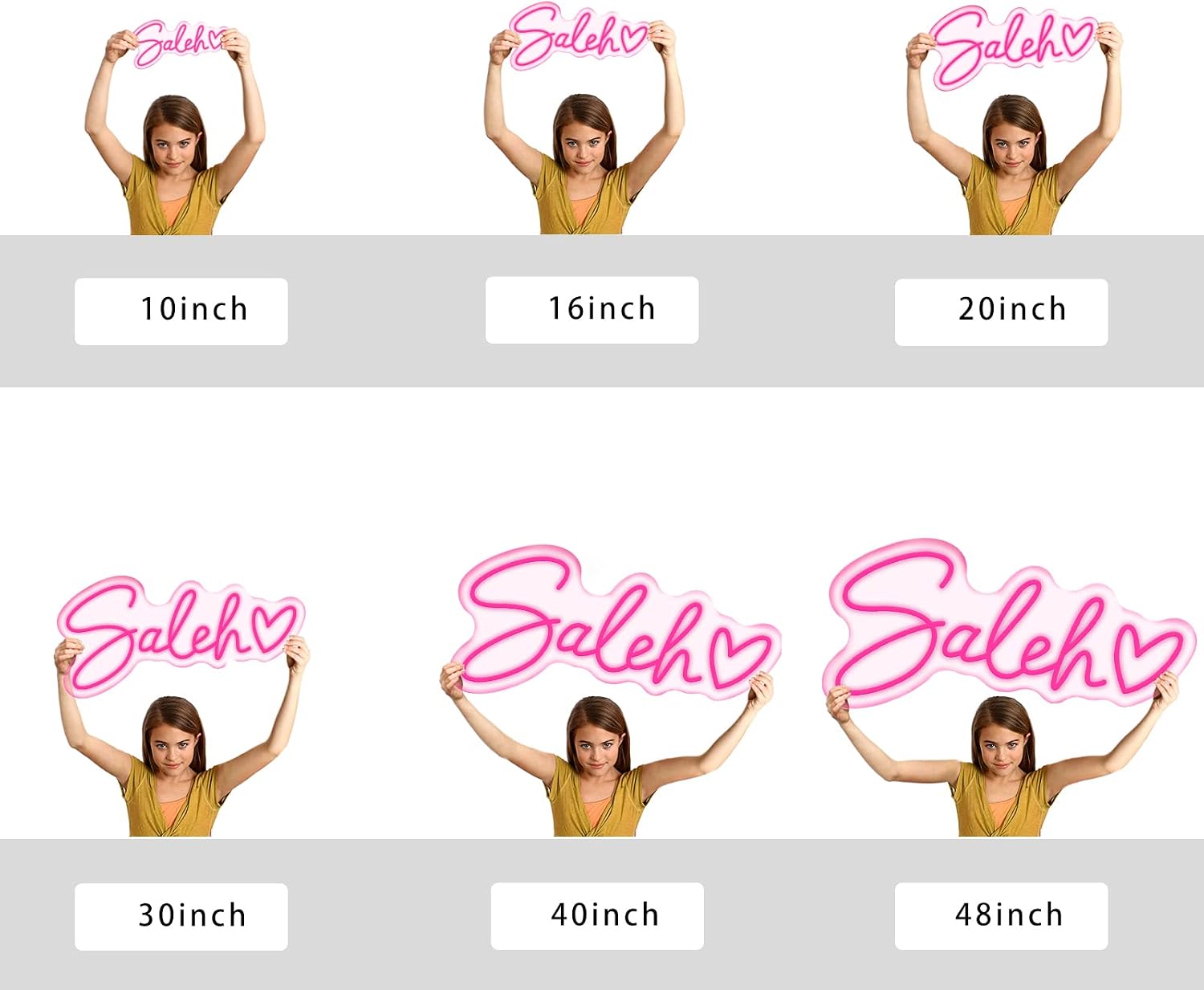
If you’ve spent more than ten minutes shopping for a custom neon sign, you’ve already noticed the pricing looks like it was generated by a random number machine. A six-letter name sign for a nursery runs anywhere from $90 to $480 on the same search results page. A bar installation quote comes back at $800 from one fabricator and $3,200 from another — for what sounds like the same thing. The gap isn’t a scam or a markup war. It’s the physical reality of what these signs are made of, how long they’re built to last, and what happens when something goes wrong at 11 p.m. on a Saturday. Custom neon signs — whether LED flex (a bendable silicone or PVC tube wrapped around LEDs) or genuine glass neon (a hand-blown glass tube filled with electrified gas) — are priced on a cost-per-letter or cost-per-linear-foot basis, and every tier of that pricing buys a meaningfully different object. This article maps out exactly what changes between a $20-per-letter build and an $80-per-letter one, so you can match your spend to your actual risk tolerance.
| Spec | Budget ($15–$28/letter) | Mid-Range ($30–$55/letter) | Premium ($60–$90+/letter) |
|---|---|---|---|
| Tube diameter | 8–10mm PVC Yatvro — $24.99 | 10–12mm silicone LC — $44.88 | 12–15mm silicone or glass Custom — $79.88 |
| Transformer rating | 30k–50k hrs, no listing | 50k hrs, ETL-listed | 50k–100k hrs, UL-listed |
| IP rating | IP20 (indoor only) | IP44–IP54 | IP65–IP67 (weatherproof) |
| Dimmer compatibility | Rarely | Often (PWM-compatible) | Standard, with smart-home options |
| Warranty | 6–12 months | 1–2 years | 2–5 years with repair SLA |
The Budget Tier ($15–$28/letter): What You’re Actually Buying
Who This Tier Is For and What the Materials Deliver
Yatvro
$24.99
In stock on Amazon
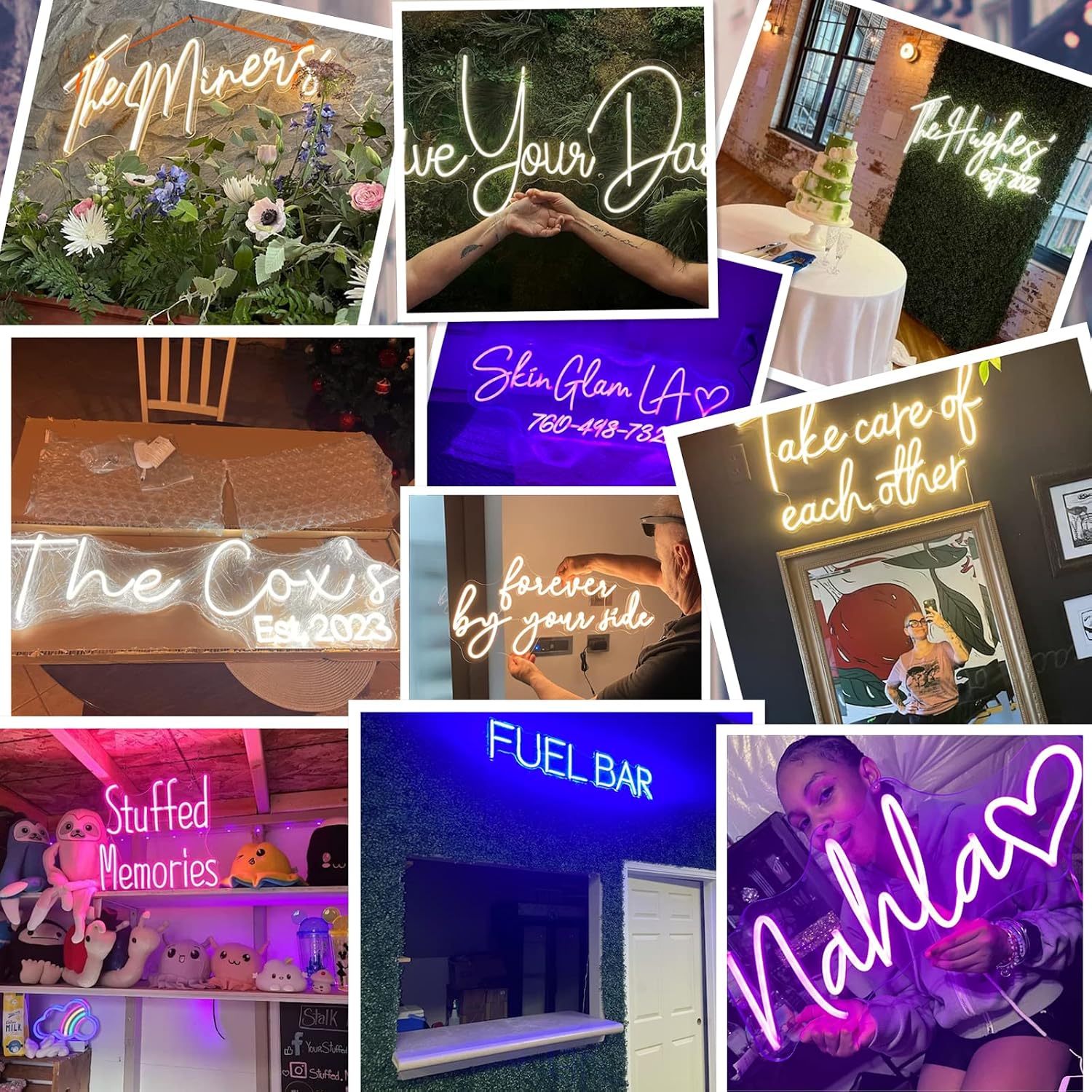
Check price on AmazonLet’s be specific about what the low end of the market produces, because it’s not nothing. Budget-tier LED neon signs — the category that Apartment Therapy’s custom neon sign buyer guidance and Sign Media Magazine’s annual fabrication reporting consistently place between $15 and $28 per letter for standard Latin characters — are real products that serve real use cases well.
The flex tubing at this price point is typically a thinner PVC extrusion, 8–10mm in diameter, housing a single-density LED strip. Color output is functional but not calibrated: that “warm white” may read closer to 4,500K (a neutral, slightly cool daylight tone) than the 2,700–3,000K (the amber-tinged warmth you see in hospitality photography) most buyers picture when they say “warm white.” Signs of the Times, in its industry pricing overview published on signs.org, notes that transformer quality is the single largest hidden cost difference between tiers. At the budget level, transformers are typically rated for 30,000–50,000 hours under ideal conditions, with no thermal protection circuit and no UL or ETL listing that would satisfy a commercial lease’s electrical inspection clause.
Mounting is usually a simple acrylic backing — clear or frosted — drilled with two keyhole slots. The finish is fine for a bedroom wall. It is not fine for a venue wall where a facilities manager will ask for your electrical certification paperwork.
The honest use case: One-time events, nurseries, home offices, birthday installs, and first-time buyers testing a sign concept before committing to a permanent build. The Knot’s wedding planning coverage specifically flags the $15–$25-per-letter range as appropriate for purchase-for-one-night-then-resell scenarios — the Instagram moment that earns its cost in a single use.
The hidden cost to model: Budget signs often ship from overseas fulfillment warehouses with 3–6 week lead times and return policies that typically require you to pay return shipping on a fragile, oddly shaped item to an international address. Factor $40–$80 in potential return friction into your real cost-of-ownership calculation before you order.
Yatvro
$24.99
In stock on Amazon
Check price on AmazonThe Mid-Range Tier ($30–$55/letter): The Working Professional’s Default
Where the Meaningful Spec Upgrades Concentrate
LC
$44.88
In stock on Amazon
Check price on AmazonThis is where the market earns its keep for commercial repeat buyers, and where most of the meaningful spec upgrades concentrate.
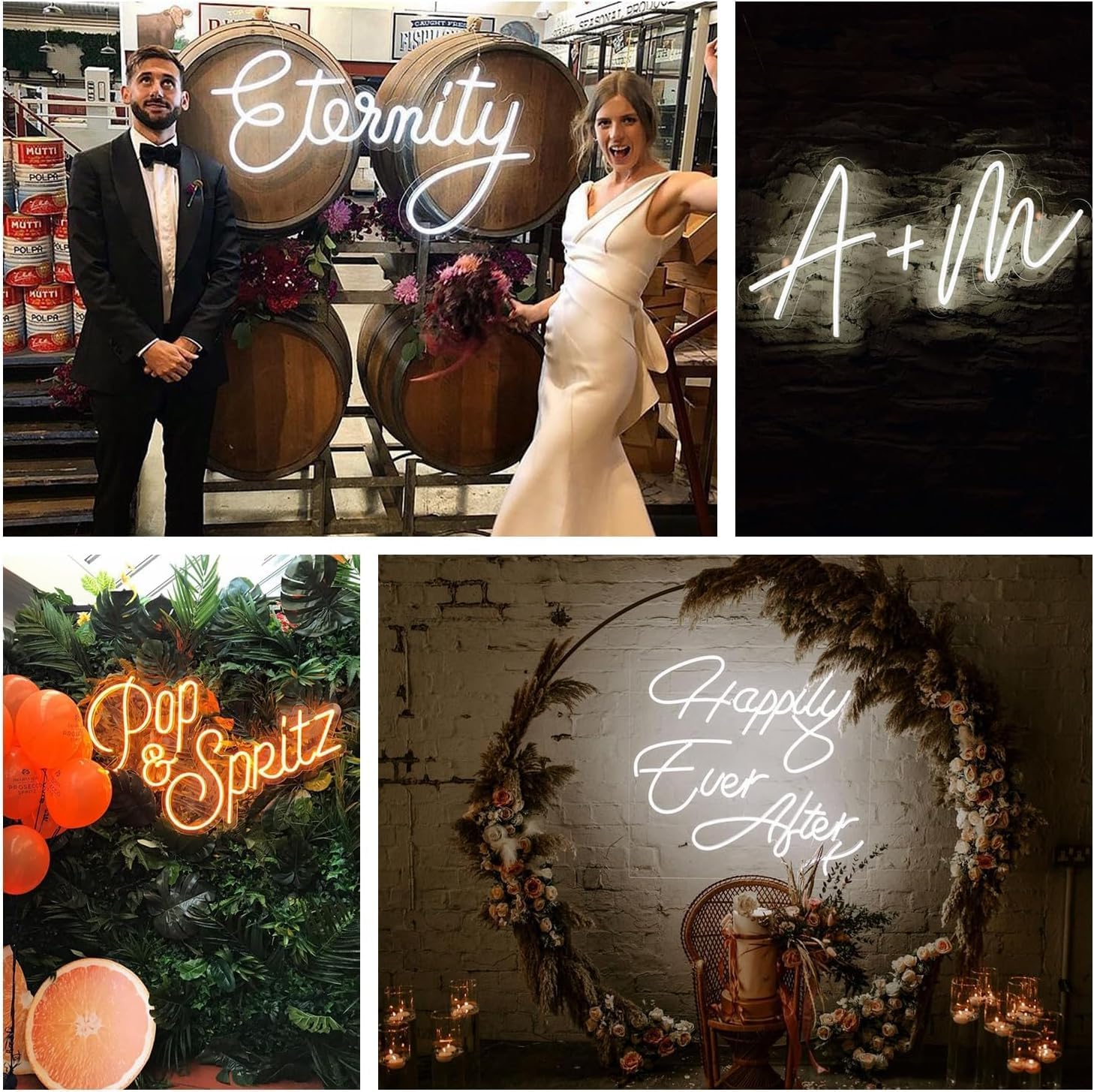
Silicone tubing replaces PVC at this price point. That matters more than it sounds: silicone flex holds its shape over time, resists yellowing under prolonged UV exposure (a real issue in window-facing installations), and tolerates the minor heat generated by denser LED strips without deforming. Sign Media Magazine’s 2024 durability benchmarks found that silicone-tubed signs showed measurably less color drift over 18-month accelerated-aging tests than equivalent PVC builds, with the report noting that the soft halo diffusion effect — the quality that makes a sign read like genuine glass neon rather than an LED strip in a tube — holds better with silicone’s light-scattering properties.
Transformers at this tier typically carry ETL certification, which is the minimum documentation you need to pass a commercial electrical inspection in most U.S. jurisdictions. They also introduce PWM dimming compatibility — PWM stands for pulse-width modulation, the technical method the transformer uses to vary brightness without flickering. This matters for smart-home integration (Lutron, Leviton, and most Zigbee-based dimmer switches rely on PWM compatibility) and for event environments where you’re running the sign at 40% brightness during cocktail hour and 100% for a key moment.
IP ratings enter the picture here in a meaningful way. IP44 means the sign is protected against water splashing from any direction — fine for a covered outdoor bar, not fine for direct rain. IP54 adds dust resistance to that splash protection. Architectural Digest’s 2024 residential neon installation coverage specifically calls out IP44 as the baseline for any installation within six feet of an outdoor space, poolside area, or high-humidity interior like a sauna or steam-adjacent bathroom.
The tradeoff to name explicitly: Mid-range fabricators vary enormously on mounting quality. Ask specifically whether your acrylic backing is laser-cut to your sign’s exact silhouette or is a generic rectangle. The silhouette cut is worth $30–$50 in perceived finish quality and makes an enormous difference on dark-painted walls, where a rectangular acrylic backer creates a visible “ghost” rectangle under certain lighting angles.
LC
$44.88
In stock on Amazon
Check price on AmazonThe Premium Tier ($60–$90+/letter): Where the Math Changes for Commercial Projects
Commission Confidence, Longevity, and the Glass Neon Distinction
Custom
$79.88
In stock on Amazon
Check price on AmazonAt $60–$90 per letter, you’re paying for three things: transformer longevity, IP65+ weatherproofing, and what fabricators in the signs industry call “commission confidence” — the ability to specify a sign for a client’s lobby, put your name on it, and know it will still look right in three years.
UL-listed transformers at this tier are rated for 50,000–100,000 hours under thermal load, meaning they include automatic shutoff circuits that protect against overheating in enclosed installations (behind a sign mounted flush to a wall with limited air circulation, for instance). The Signs of the Times industry pricing overview notes that transformer replacement — running $80–$200 per unit at retail — is the most common post-warranty service call on budget and mid-range signs, and that the premium tier’s longer transformer life is where the total cost of ownership math often inverts for multi-sign commercial buildouts.
IP65 is the rating that unlocks true outdoor applications: it means the sign is fully dust-tight and protected against water jets from any direction. IP67 adds brief submersion tolerance, which matters more in practice than it sounds — an IP65 sign in a hard-rain scenario on an exposed rooftop terrace is a different risk proposition than the same sign under a covered pergola. Event rental companies building permanent inventory should treat IP65 as a minimum spec for any sign that will travel outdoors, per fleet management guidance documented in Sign Media Magazine’s annual fabrication reporting.
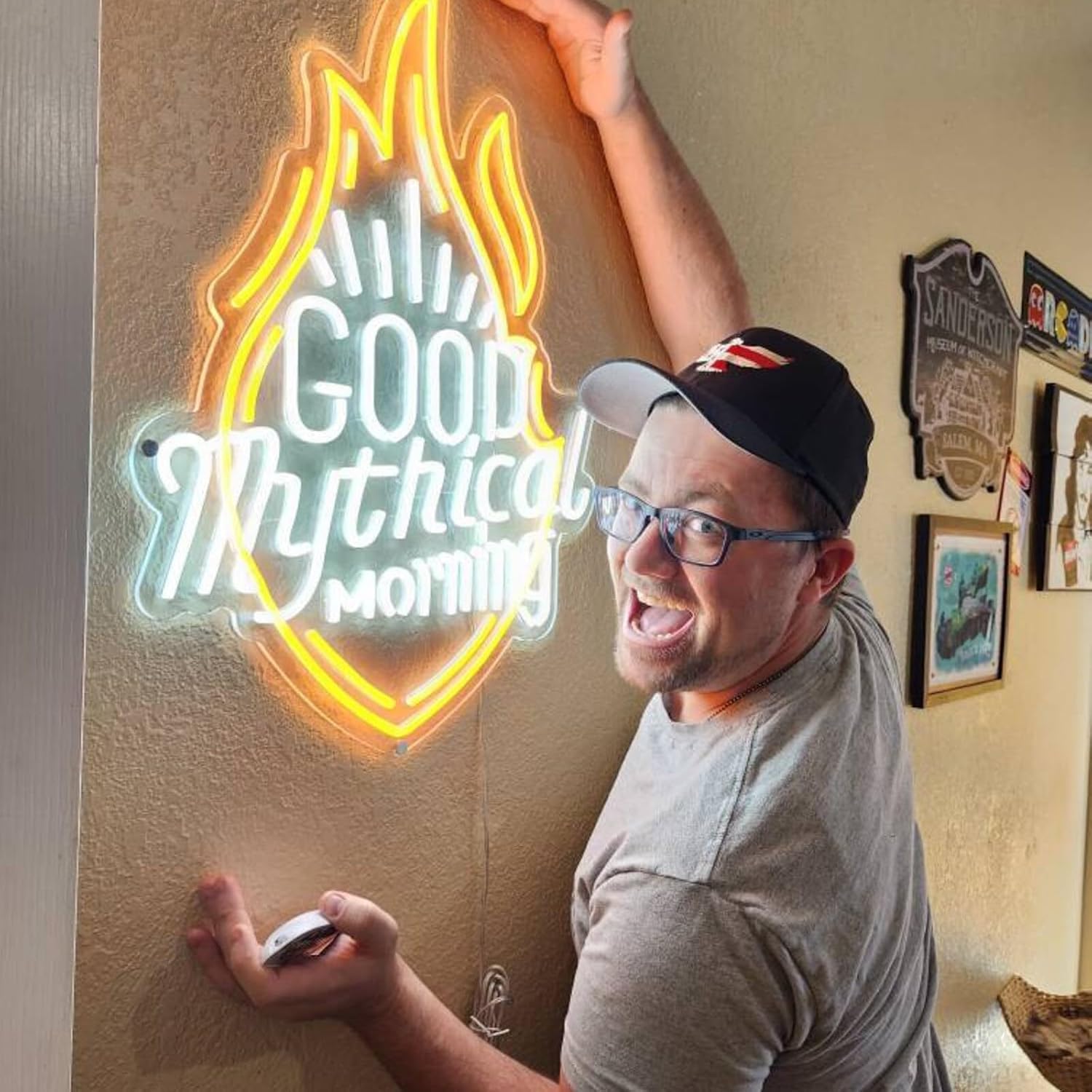
The other premium-tier differentiator that doesn’t show up in spec sheets is color temperature accuracy. Genuine glass neon — hand-blown and gas-filled, not LED — lives almost exclusively in this price tier, starting around $75–$90 per letter from domestic fabricators. Glass neon produces a specific spectral quality: a continuous emission spectrum rather than the point-source LED approximation. Architectural Digest’s residential design coverage notes that production designers and high-end event stylists specifically request glass neon for the warmth that reads correctly on camera without additional color correction — a quality that LED neon, even excellent silicone LED neon, approximates rather than replicates.
The tradeoff at the premium tier: Lead time. Domestic premium fabricators typically run 3–6 week production queues. If your installation deadline is firm and less than four weeks out, the premium tier may require an expedite fee — typically 20–30% above base price — or may simply be unavailable from quality domestic studios.
Custom
$79.88
In stock on Amazon
Check price on AmazonThe Decision Rule: If X, Then Y
You’ve read the specs. Here’s how to close the decision.
If your sign is for a single event, a nursery, or a gift under $300 total: The budget tier ($15–$28/letter) is the correct choice. You’re not buying a long-run asset. Model the return friction and add $50 buffer for worst-case shipping issues, and you’re still well ahead of overspending on transformer longevity you’ll never use.
If you’re a designer speccing a client installation, a bar owner building a branded wall, or an event rental company adding to inventory: Mid-range ($30–$55/letter) is your floor, and ETL certification plus PWM dimmer compatibility are non-negotiable deliverables — not nice-to-haves. Get the silhouette-cut backing confirmed in writing before production begins.
If the sign faces outdoor exposure, lives in a high-traffic commercial environment, or represents your studio’s portfolio on a client wall: The premium tier ($60–$90+/letter) is where the total cost of ownership math closes in your favor by year two. UL listing, IP65+, and a 2–5 year warranty with a repair service-level agreement are the specs doing that work. For genuine glass neon’s visual quality specifically, there is no lower-tier substitute — it’s a material decision, not a budget one.
If you’re between tiers on budget: The single highest-leverage upgrade to negotiate is the transformer. A mid-range fabricator who will install a UL-listed transformer for a $75–$100 upcharge is giving you roughly 80% of premium-tier longevity at mid-range pricing. Ask the question directly — most domestic studios can accommodate it as a line-item addition.
The cost-per-letter number is the starting metric, not the ending one. What you’re actually buying is a transformer’s rated lifespan, a tube material’s ten-year color fidelity, and a warranty policy’s real-world claims process. Match those three things to your project’s actual timeline and risk profile, and the right tier becomes obvious.