
You’ve decided a neon sign belongs in the home bar — the question now is which kind, how it’s powered, and whether your wall dimmer will play nice with it. “Neon” is actually two very different technologies sharing a name: genuine glass neon, which is hand-bent borosilicate tubing filled with gas and electrified by a high-voltage transformer (typically 2,000–15,000 volts at very low amperage), and LED flex neon, which is a silicone or PVC strip fitted with tiny LEDs shaped to mimic that tubular glow at low voltage (typically 12V or 24V DC). Each has its own power rules, dimmer compatibility, and aesthetic personality. Get the pairing wrong and you’re looking at a buzzing, flickering wall ornament or a tripped breaker. Get it right and you have a bar feature that draws every eye in the room and runs cleanly for years. This guide walks through the decision — transformer load first, dimmer second, material call third.
| EDITOR'S PICKNeon Signs Beer Bar Club Bedroo… | Mid-tierML Real Glass Neon Signs 17”×13… | Budget pick[Always Happy Hour Beer Bar Neon…](https://www.amazon.com/dp/B0F919GWPS?tag=greenflower20-20) | |
|---|---|---|---|
| Size | 24×20 in | 17×13 in | — |
| Power | — | — | USB |
| Dimmer | — | — | ✓ |
| Mounting | Wall | Wall/Window | Wall |
| Use Case | Bar/Club | Home/Garage | Bar/Home |
| Price | $148.99 | $109.99 | $38.99 |
| See on Amazon → | See on Amazon → | See on Amazon → |
Transformer Load: Sizing It Before You Order
The transformer (sometimes called a power supply or driver, depending on the technology) converts your household current into whatever voltage or current the sign actually needs. Sizing it correctly isn’t optional — it’s the difference between a sign that runs cool and lasts a decade and one that runs hot, shortens its own lifespan, or trips a circuit.
For Glass Neon
Traditional glass neon uses a magnetic or electronic high-voltage transformer. Sign Media Canada’s published guidance on transformer sizing for low-voltage neon installations states the standard rule: the transformer’s secondary wattage rating should equal or exceed the wattage of the tube load by at least 10–20 percent. A typical single-color script sign reading “OPEN BAR” in 12mm tubing across roughly 36 inches runs approximately 30–60 watts. A more elaborate two-color cursive piece at 48 inches can climb to 80–120 watts. Most residential circuits are 15-amp (1,800W) or 20-amp (2,400W), so glass neon load alone is rarely the issue — it’s running multiple signs on the same circuit that causes problems. If your buildout includes three or four glass pieces, treat them as separate circuits or confirm aggregate load with a licensed electrician.
Electronic transformers for glass neon run silent or near-silent; older magnetic transformers carry a characteristic low hum that some owners embrace as atmosphere and others find intolerable at close range. In a quiet residential room rather than a loud bar environment, that distinction matters more than any spec sheet will communicate.
For LED Flex Neon
LED neon power supplies are switching DC adapters, almost always 12V or 24V. The sizing rule here is more forgiving because wattage per foot is low — typically 4–10 watts per linear foot depending on LED density and color. A 6-foot custom sign drawing 8W/ft uses 48 watts; a 12V supply rated at 5 amps (60W) covers it with headroom. The International Sign Association’s electrical safety standards for interior signage recommend keeping power supply load at no more than 80 percent of rated capacity to avoid thermal stress. For that 48W sign, a 60W supply is acceptable; a 100W supply is ideal.
The practical upside: LED flex signs almost always ship with a manufacturer-matched power supply. The risk is in daisy-chaining multiple signs to one supply, or substituting a cheaper third-party adapter. Industry documentation from Sign Media Canada consistently identifies mismatched supplies as the single most common cause of premature LED failure and color-shift over time.
Typical load comparison:
| Format | Voltage | Typical wattage (~36” sign) | Dimmer type needed | Tier |
|---|---|---|---|---|
| Glass neon, magnetic transformer | 2,000–15,000V secondary | 40–80W | Trailing-edge or neon-specific | Neon — $148.99 |
| Glass neon, electronic transformer | 2,000–15,000V secondary | 40–80W | Leading-edge or electronic-rated | ML — $109.99 |
| LED flex neon, 12V DC | 12V DC | 20–50W | PWM-compatible DC dimmer | Always — $38.99 |
| LED flex neon, 24V DC | 24V DC | 20–50W | PWM-compatible DC dimmer | ML — $109.99 |
Dimmer Pairing: Why Most Smart Dimmers Fail Glass Neon
This is where home buildouts go sideways most often. Builders routinely spec Lutron Caseta or comparable smart dimmers as standard finish — and those dimmers are engineered for LED or incandescent loads, not for neon transformers. The mismatch doesn’t always cause immediate failure; it causes low-frequency flicker, buzzing, or erratic behavior that makes the sign unusable at anything below 70 percent brightness.
Glass Neon Dimming
Genuine glass neon dimmers work by controlling the voltage or current delivered to the transformer’s primary — your 120V circuit side. The challenge is that glass neon has a minimum sustaining voltage below which the gas discharge simply extinguishes rather than dims. In practice the usable dimming range is roughly 50–100 percent brightness, not the full 0–100 percent available with LEDs. Custom glass fabricators note this in their product documentation as a consistent point of buyer confusion.
What to specify: A neon-rated electronic low-voltage dimmer, or a dedicated neon sign dimmer sold as an add-on by the fabricator. Lutron’s architectural-grade dimmers rated specifically for electronic low-voltage or magnetic low-voltage loads can work with compatible electronic neon transformers, but you must confirm the exact model against the transformer’s manufacturer documentation before purchasing. Do not assume compatibility; cross-reference the transformer spec with the dimmer manufacturer’s published lamp-compatibility list.
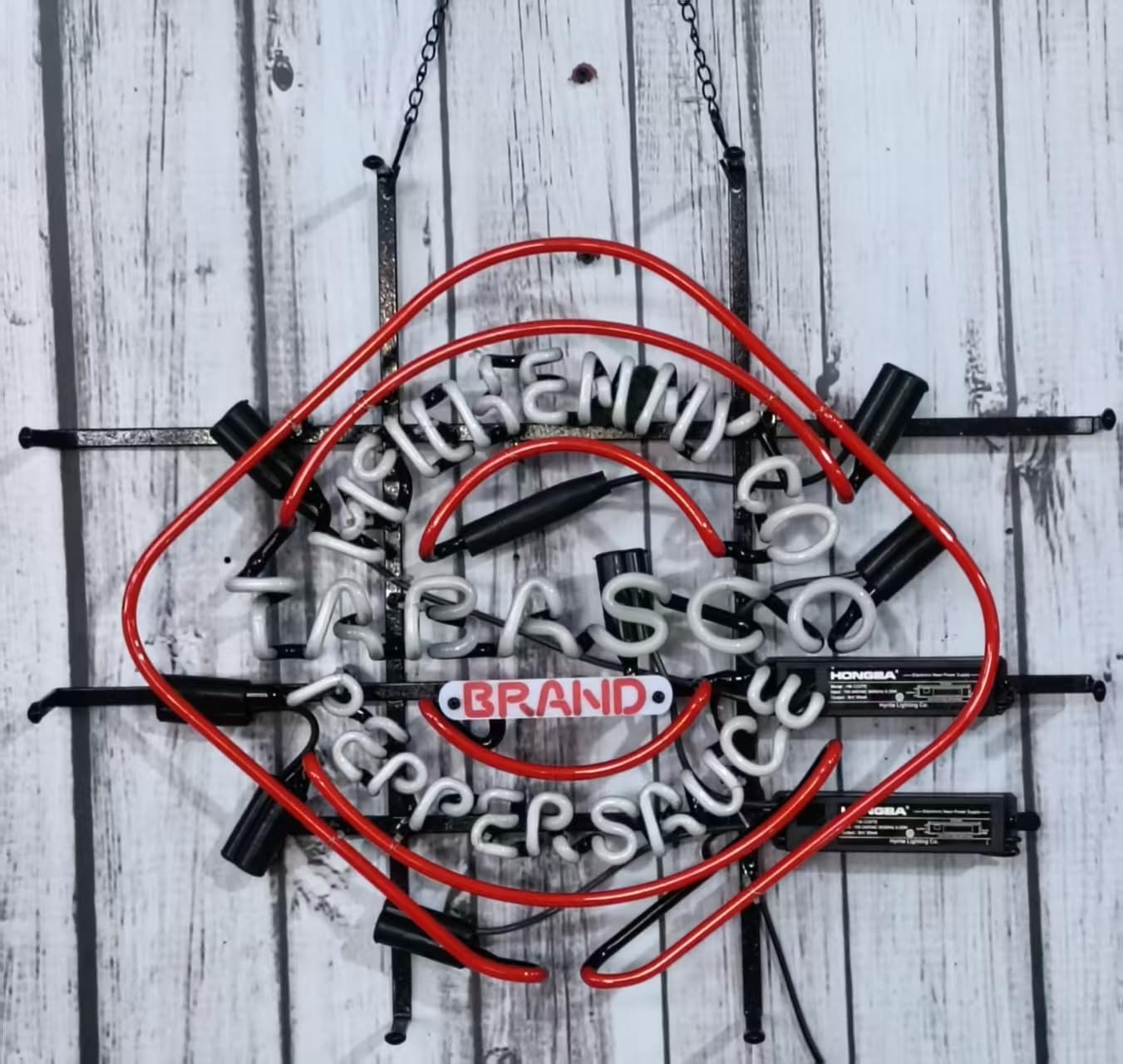
Neon
$148.99
In stock on Amazon
Check price on AmazonLED Flex Neon Dimming
LED flex neon dims via PWM (pulse-width modulation) — the driver rapidly switches current on and off at a frequency too fast for the eye to detect, varying perceived brightness by changing the ratio of on-time to off-time. A cheap leading-edge (TRIAC) dimmer often causes visible strobing on LED strips because its switching frequency conflicts with the PWM signal.
For smart-home integration, the cleanest path is a 0–10V dimming interface or a PWM-native controller connecting to your home automation system via Wi-Fi or Zigbee. Higher-end custom fabricators increasingly offer signs pre-wired with DMX-compatible drivers for integration with professional control systems. If you are building a serious home theater or automated bar space, the DMX path is worth the upcharge — it unlocks scene control, scheduling, and color tuning that Wi-Fi strip controllers cannot match reliably over years of use.
As Apartment Therapy’s coverage of home bar wall styling with neon lighting observes, LED neon signs with PWM controllers dim smoothly to near-zero brightness, making them genuinely useful as ambient accent lighting at lower intensity — a functional versatility that glass neon cannot offer.
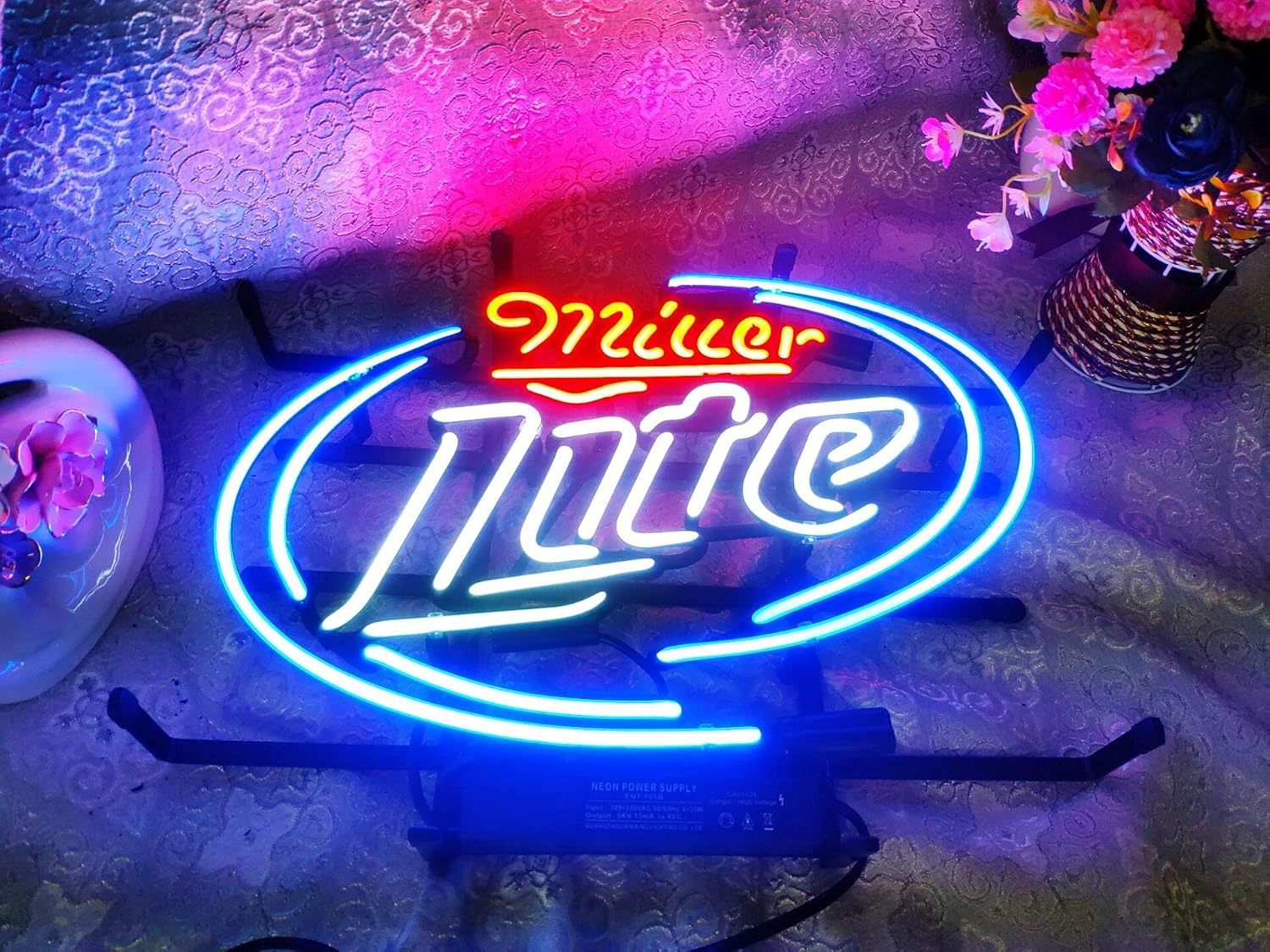
ML
$109.99
In stock on Amazon
Check price on AmazonBudget LED Dimming
For owners not pursuing smart-home integration, a basic PWM DC dimmer inline with the power supply delivers smooth 0–100 percent control for under $20. This is the entry point for LED flex neon dimming and works reliably for single-sign installations without automation requirements.
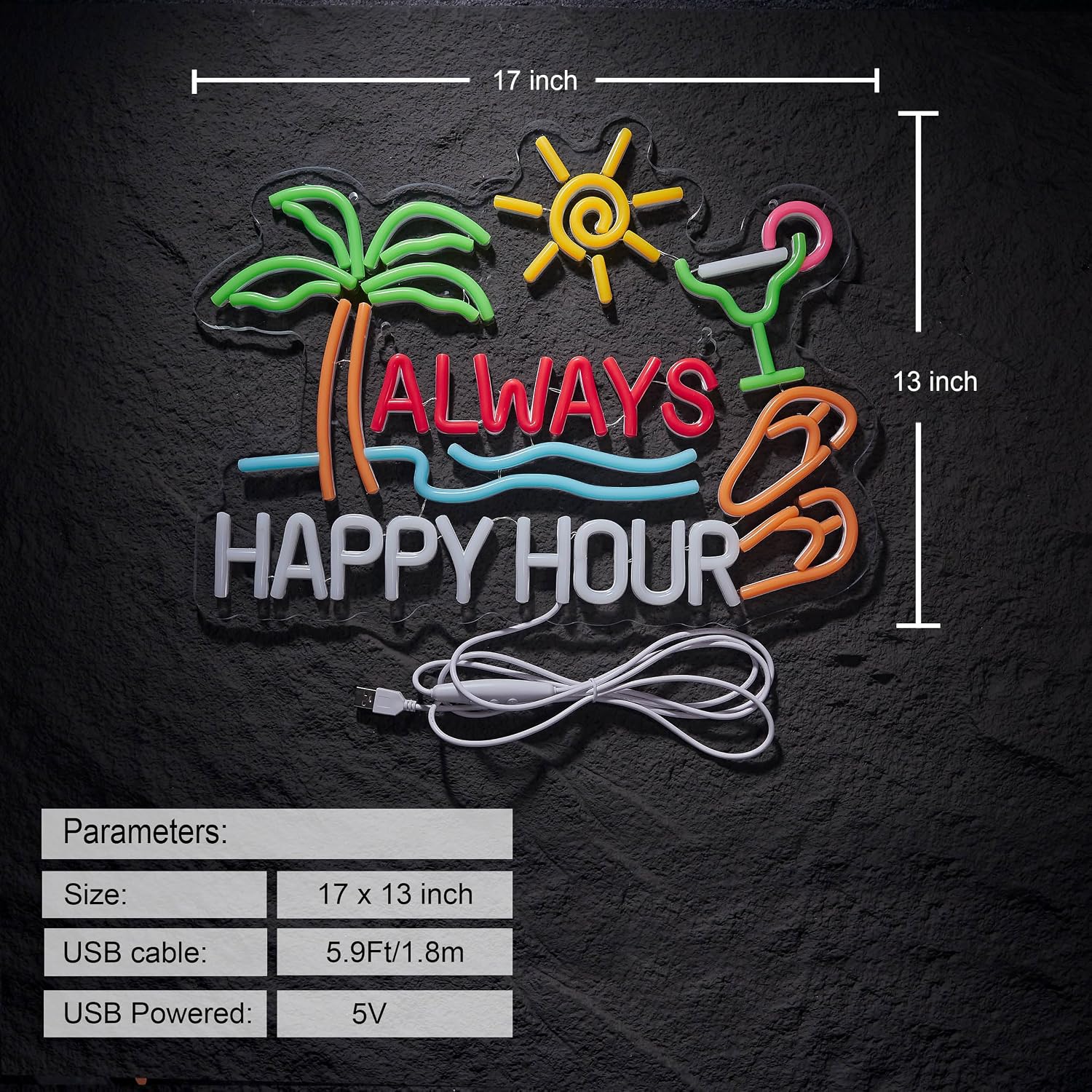
Always
$38.99
In stock on Amazon
Check price on AmazonThe Glass vs. LED Material Call
Architectural Digest’s residential coverage of the neon revival consistently frames the distinction this way: glass neon reads as craft while LED neon reads as accessibility. That is not a put-down of either technology — it is a design vocabulary distinction that matters enormously for bar buildouts where authenticity signals carry real weight.
Where Glass Neon Wins
Neon
$148.99
In stock on Amazon
Check price on Amazon- Color depth and saturation. The gas-and-phosphor combination in genuine glass neon produces a spectral quality that LED flex approximates but does not replicate. House Beautiful’s buyer roundups on neon signs consistently identify this as the primary reason design-forward buyers pay the premium.
- Authenticity signal. A bar aesthetic built around vintage Americana, Art Deco, or mid-century industrial reads more cohesively with real glass. Owners in long-run reviews frequently describe glass neon as the element that makes the room feel credible.
- Ambient sound. The faint electrical hum of a magnetic transformer is a feature in bar contexts — it contributes to atmosphere in ways that are subjective but worth naming before you commit.
The tradeoffs: Glass neon typically runs $200–$600 for a small-to-medium custom piece through domestic fabricators, and $600–$2,000 or more for larger or more complex work. It is fragile — shipping damage rates are meaningfully higher than LED flex, and replacing a broken section requires a glass bender. Warranty claims on glass neon are more complicated than LED returns.
Where LED Flex Neon Wins
ML
$109.99
In stock on Amazon
Check price on Amazon- Dimming range and smart-home integration. As covered above, LED flex gives you full 0–100 percent dimming, PWM compatibility, and DMX options that glass cannot match.
- Weatherproofing options. Quality LED flex neon is available in IP65 or IP67 ratings, making it usable in covered outdoor bar spaces, garages, or basement bars with humidity concerns. Glass neon is almost exclusively an indoor product.
- Price and iteration speed. For a home buildout where the design might evolve — you may want to change phrasing, add a second sign, or swap a color — LED flex at $80–$400 per piece lets you iterate without major financial commitment. Established LED flex fabricators have optimized production for fast turnaround, typically 5–10 business days.
- Driver longevity. Manufacturer-rated LED driver lifespan is typically 30,000–50,000 hours. Sign Media Canada’s transformer sizing documentation notes that electronic neon transformers commonly reach 20,000–30,000 hours at full load, with significant degradation when consistently run at capacity margins.
The Budget Entry Point
Always
$38.99
In stock on Amazon
Check price on AmazonFor owners building a first home bar on a limited budget, a single LED flex sign in the $80–$150 range paired with a PWM DC dimmer and a manufacturer-matched power supply represents the lowest-risk path. The sign ships with matched hardware, installs with basic tools, and delivers the visual impact of neon without the transformer-compatibility and fragility concerns of glass. House Beautiful’s coverage of affordable neon options for home interiors confirms this segment as the fastest-growing entry point for residential neon buyers.
The Hybrid Approach: One Build, Both Technologies
Several owners building serious home bar environments have landed on a hybrid approach: one glass neon centerpiece — a logo, a signature word, a house number — flanked by LED flex accent pieces for supporting signage. This preserves the craft signal of glass where it matters most while giving supporting elements full dimmer flexibility and weatherproofing if the bar extends to an outdoor patio. Architectural Digest’s interior design coverage of residential bar spaces highlights this layered approach as the direction higher-end buildouts are moving, with glass providing the focal anchor and LED flex handling ambient fill and color accent.
Custom fabricators with capability in both technologies can fulfill glass and LED flex pieces in a single order, which simplifies project coordination and ensures color-temperature matching is handled at the source rather than assembled from mismatched vendors.
The Decision Rule
If your bar is fully interior, has dedicated circuits, and the aesthetic is vintage, craft, or hospitality-authentic — spec glass neon for the hero piece. Budget for a neon-rated dimmer, confirm transformer type before purchasing, and accept the narrower dimming range and higher shipping-fragility risk.
If you need full dimming range, smart-home integration, outdoor-rated flexibility, or you are building a multi-sign installation on a budget — LED flex neon is the right call at every price point from $100 to $1,500. Specify 24V over 12V for runs longer than 8 feet (voltage drop performance is meaningfully better), request the IP rating in writing, and use a PWM-native or 0–10V dimmer rather than a standard leading-edge switch.
If your budget is $600 or above and the aesthetic supports it — price out the hybrid. A glass hero sign with LED flex supporting pieces is what the strongest residential bar buildouts are running, and fabricators with both production capabilities can deliver matched sets in a single order.
The transformer and dimmer questions are not afterthoughts — they are the specification decisions that determine whether your sign performs the way you imagined it. Lock those down before you finalize the artwork, and the rest of the build follows cleanly.